

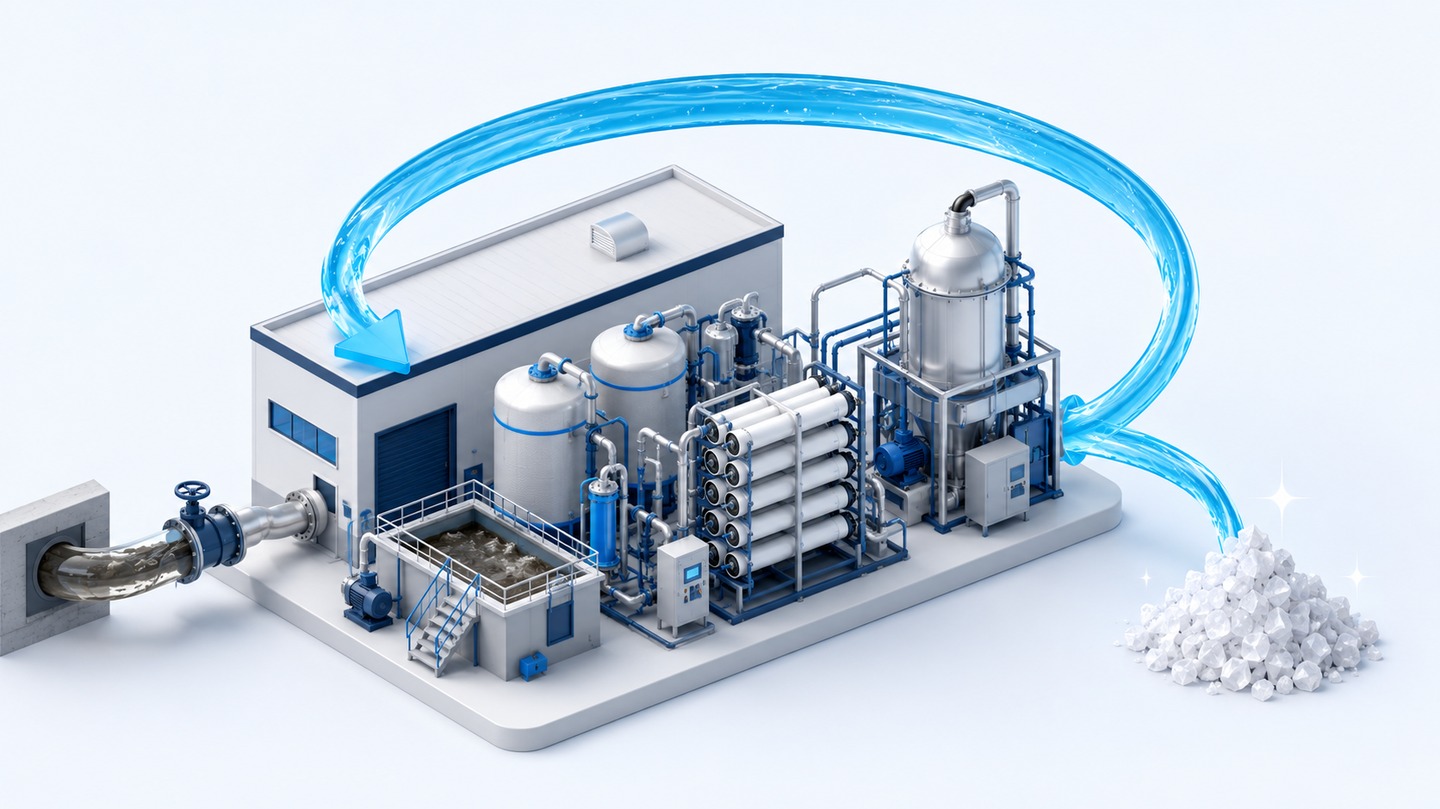
In certain situations — very strict discharge standards, no outlet, acute water stress — a site simply can no longer discharge liquid effluent. This is where zero liquid discharge (ZLD) comes in: recovering almost all the water and concentrating the salts down to a solid residue.
An ambitious concept, ZLD is not always realistic at 100%. A breakdown, without idealisation.
1. What is ZLD?
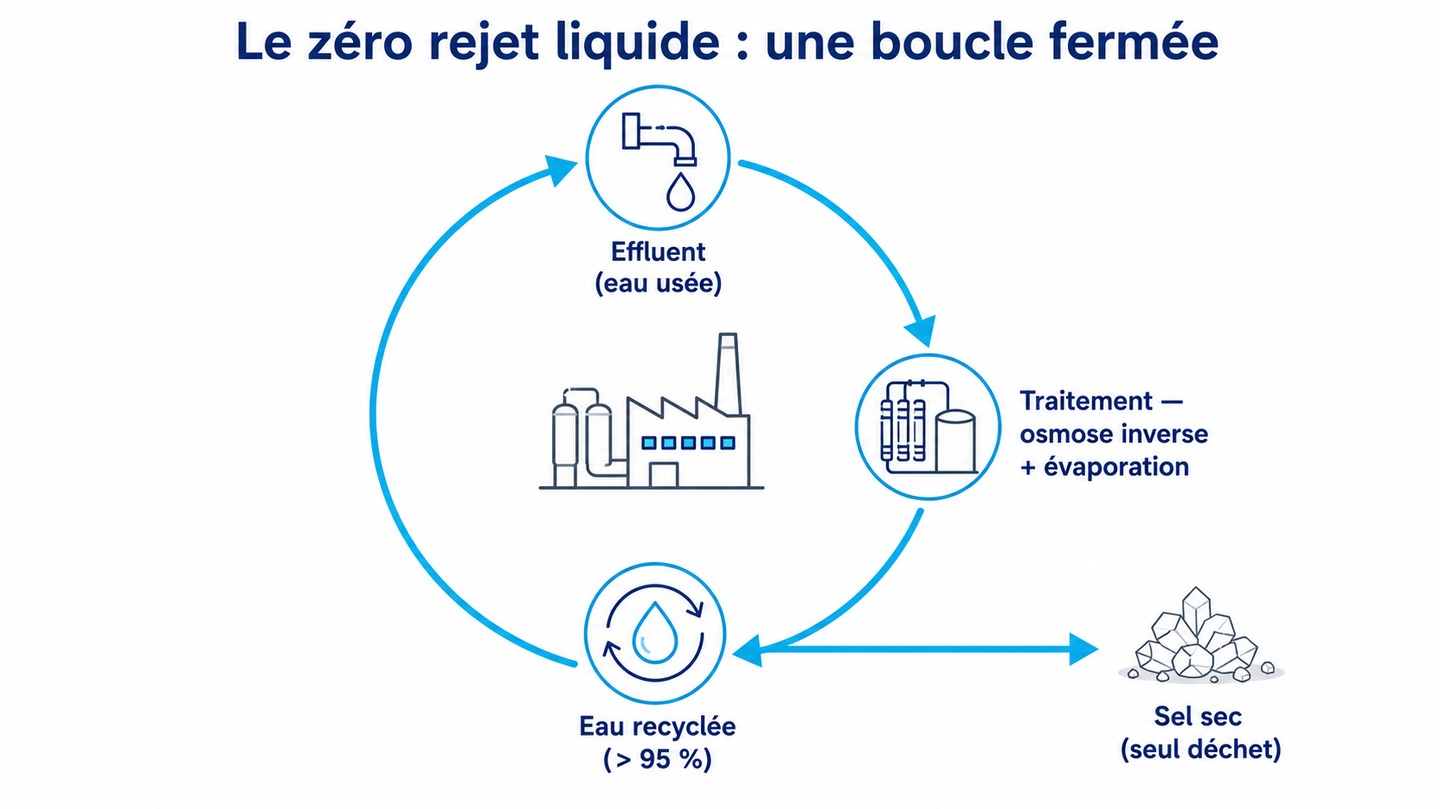
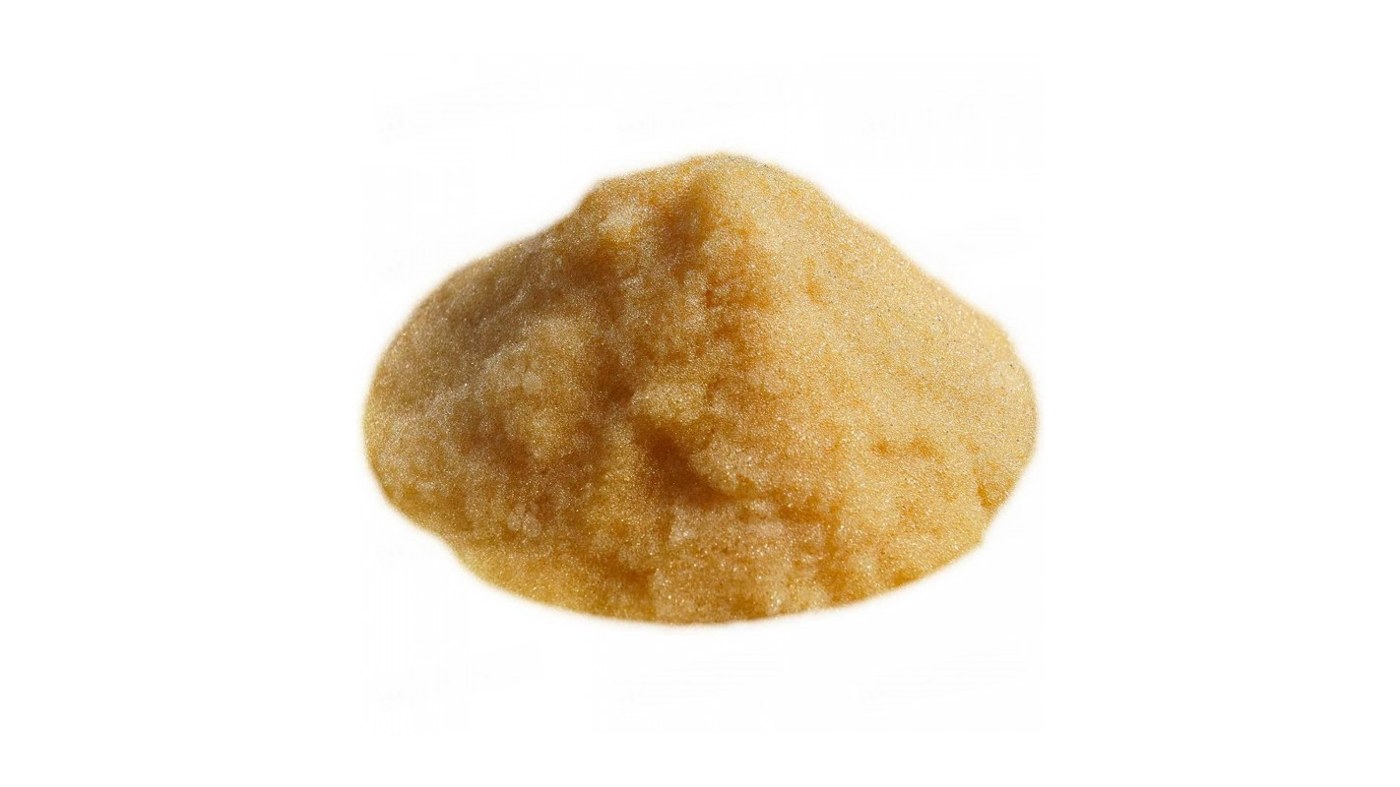
Zero liquid discharge means discharging no liquid effluent: the water is recovered and recycled (often > 95%), while the salts and contaminants are concentrated down to a solid (dry salt), the only waste to remove. It is the most advanced level of discharge control.
2. Why aim for ZLD?
Several factors drive towards ZLD:
- Very strict discharge standards or the impossibility of discharging (no outlet).
- Water stress: recycling water becomes vital.
- Levies and taxation on discharges (including the PFAS levy).
- Image and the requirements of clients.
3. The technology chain
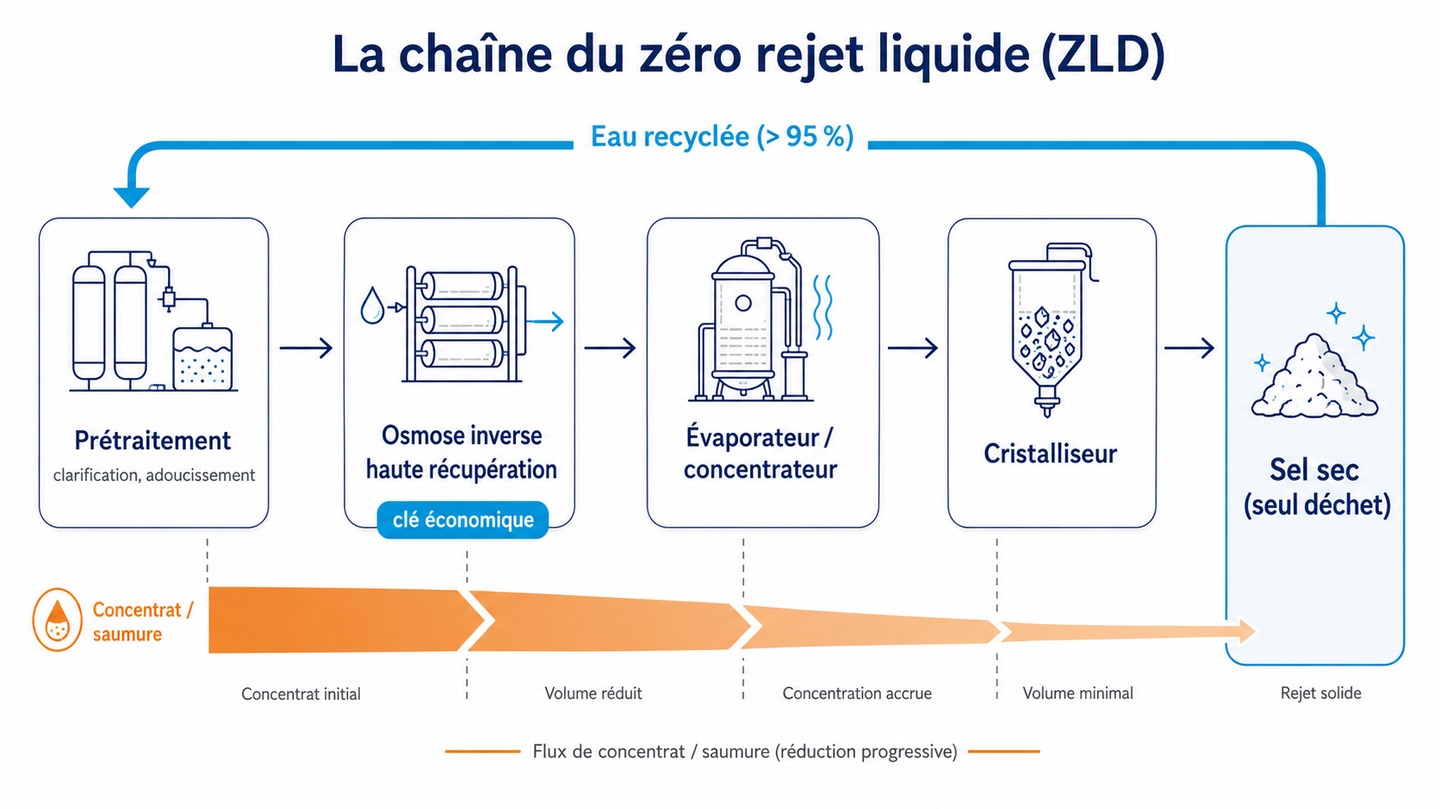
A ZLD installation stacks several stages, from the least to the most energy-hungry:
- Pretreatment: clarification, softening, removal of troublesome matter.
- Membrane concentration: high-recovery reverse osmosis to extract as much water as possible at the lowest energy cost.
- Evaporator / concentrator: reduction of the residual volume.
- Crystalliser: production of the dry salt.
4. MLD or ZLD? The comparison
Full ZLD is costly in energy and investment. Many sites prefer minimal liquid discharge (MLD): most of the water is recovered while keeping a very small residual discharge, for a much more reasonable cost. The table below clarifies the trade-off:
| Criterion | ZLD — zero liquid discharge | MLD — minimal liquid discharge |
|---|---|---|
| Liquid discharge | None — only residue: dry salt | Residual, very small |
| Water recovery | Almost all | Up to ~ 95% |
| Technologies | High-recovery RO + evaporator + crystalliser | High-recovery reverse osmosis (limited evaporation) |
| Energy | High (~ 10 kWh/m³) | Lower (~ 7 kWh/m³) |
| Investment (CAPEX) | High (evaporator, crystalliser) | ~ 30–40% of the cost of a ZLD |
| When to choose it | Discharge banned, protected zone, absolute constraint | High recovery at controlled cost |
📊 Orders of magnitude from comparative studies: MLD achieves very high recovery for about a third of the cost of a full ZLD, by avoiding the most energy-hungry thermal stages.
5. Benefits and limits
Benefits: water very largely recycled, compliance even on the most constrained discharges, resilience. Limits: high CAPEX and energy consumption (evaporation is expensive), and salt management to organise. Hence the interest of maximising the membrane share before evaporation.
6. The central role of reverse osmosis
The more water is extracted by reverse osmosis (low energy) before evaporation (very energy-hungry), the more the overall cost drops. High-recovery osmosis is therefore the economic key of a successful ZLD/MLD project.
7. Who is ZLD for?
ZLD/MLD concerns sites with sensitive or impossible discharges: chemicals, pharmaceuticals, surface treatment, energy, textiles, as well as installations in a protected zone or subject to strict discharge standards.
Conclusion
Zero liquid discharge is the culmination of discharge control: recycling almost all the water and keeping only a solid residue. Ambitious and costly, it is often reasoned as MLD (minimal discharge), maximising the reverse-osmosis share to contain the energy bill. The right level is sized according to the discharge constraints and the site context.
The DIMM teams support industrial companies, in Belgium, France and the Netherlands, in the pretreatment and membrane concentration of discharge-reduction projects.
🔗 DIMM products & solutions
DIMM supplies the upstream building blocks of a controlled ZLD/MLD strategy — where most of the performance and cost is decided:
- Industrial reverse osmosis (high recovery)
- Industrial softeners and pretreatment
- Filter media and cartridges
- The full DIMM product range
Reference points
- ZLD (Zero Liquid Discharge): no liquid discharge, water recycled (often > 95%), salts concentrated to a solid.
- Typical chain: pretreatment → high-recovery reverse osmosis → evaporator/concentrator → crystalliser.
- MLD (Minimal Liquid Discharge): a more economical alternative, with a very small residual discharge.
- Limits: high CAPEX and energy (evaporation), dry-salt management.
- Orders of magnitude (comparative studies): energy ~7 kWh/m³ (MLD) vs ~10 kWh/m³ (ZLD); CAPEX of an MLD ≈ 30–40% of that of a full ZLD.
- Reverse osmosis maximises water recovery at low energy cost before evaporation. Information dated August 2026.