


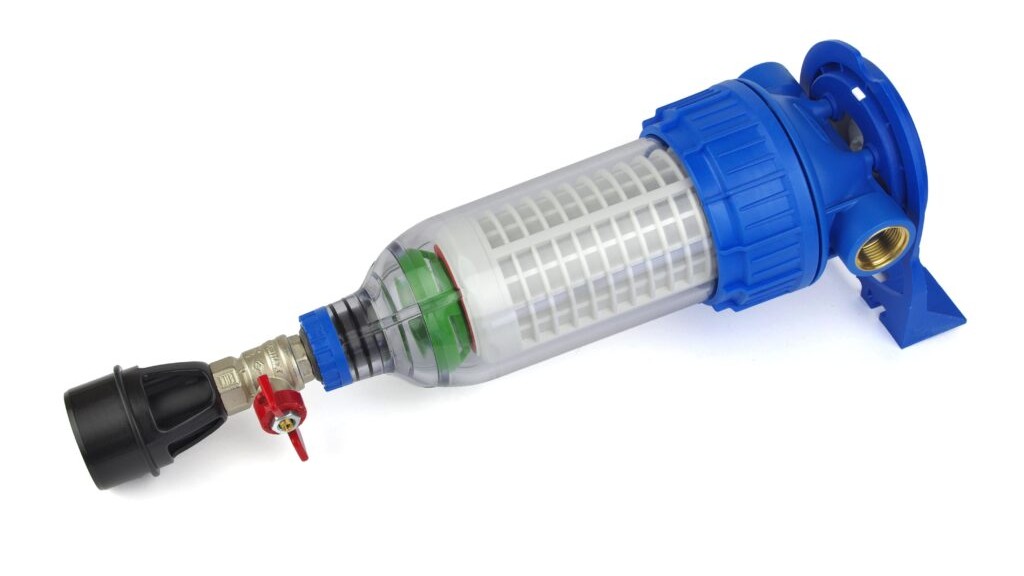
A cartridge is not a "universal" filter: it is a specialised tool. A sediment cartridge does not remove chlorine; a carbon cartridge does not stop dissolved salts; a reverse-osmosis membrane is pointless if the incoming water is full of sand that clogs it. Good filtration therefore relies on the right type of cartridge, in the right place, in the right order · chosen according to the water analysis and the intended use.
1. Four main modes of action
Before talking about models, you need to understand how a cartridge works. There are four main families of mechanisms:
- Mechanical filtration: the cartridge physically retains particles (sand, rust, clays, microplastics) according to its fineness, expressed in microns.
- Chemical filtration (adsorption): the media (activated carbon) captures chlorine, tastes, odours, some pesticides and volatile organic compounds (VOCs) on its surface.
- Ion exchange: a resin swaps unwanted ions · calcium and magnesium (limescale) or nitrates · for other ions.
- Membrane filtration: a membrane (ultrafiltration or reverse osmosis) separates water from contaminants at micro or even molecular scale.
A treatment train usually combines several of these modes, because none of them does everything.
2. Sediment cartridges: the first barrier
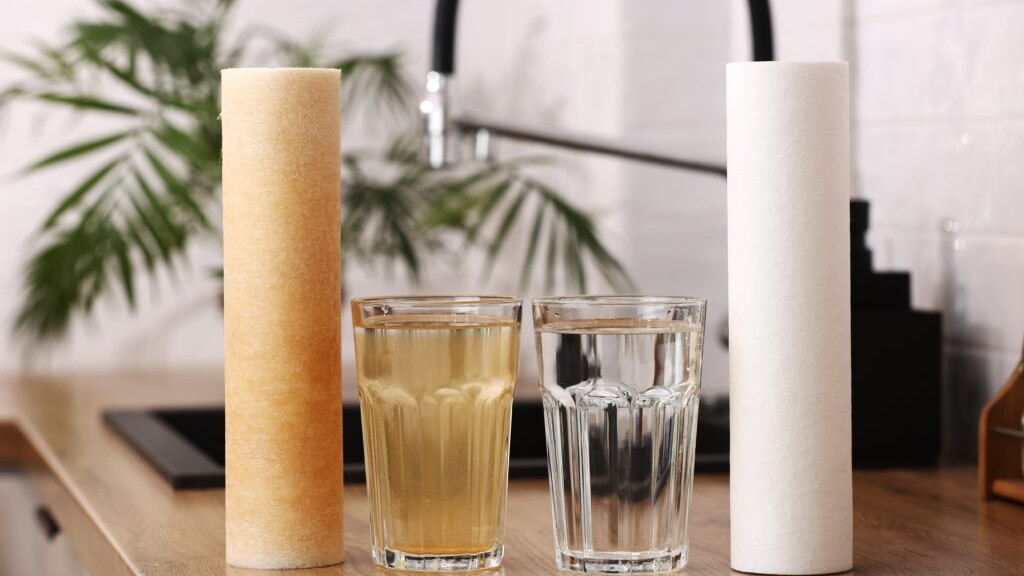
This is the inlet cartridge of almost every installation. It retains solid particles (sand, silt, clays, iron oxides, microplastics) and protects downstream equipment (RO unit, softener, carbon) by limiting fouling.
Its key criterion is the micron rating: 50, 25, 10, 5 or 1 micron. The smaller the number, the finer the filtration · but the faster the cartridge clogs. 5 microns is a common choice for domestic pre-filtration, sometimes staged (e.g. 20 µm then 5 µm) on heavily loaded water.
In terms of construction, there are three main types: the wound cartridge (depth filtration, economical), the pleated cartridge (large surface area, washable/reusable, long life) and the spun/melt-blown cartridge (graded filtration, good fineness/flow ratio).
3. Activated carbon cartridges: taste and chemistry
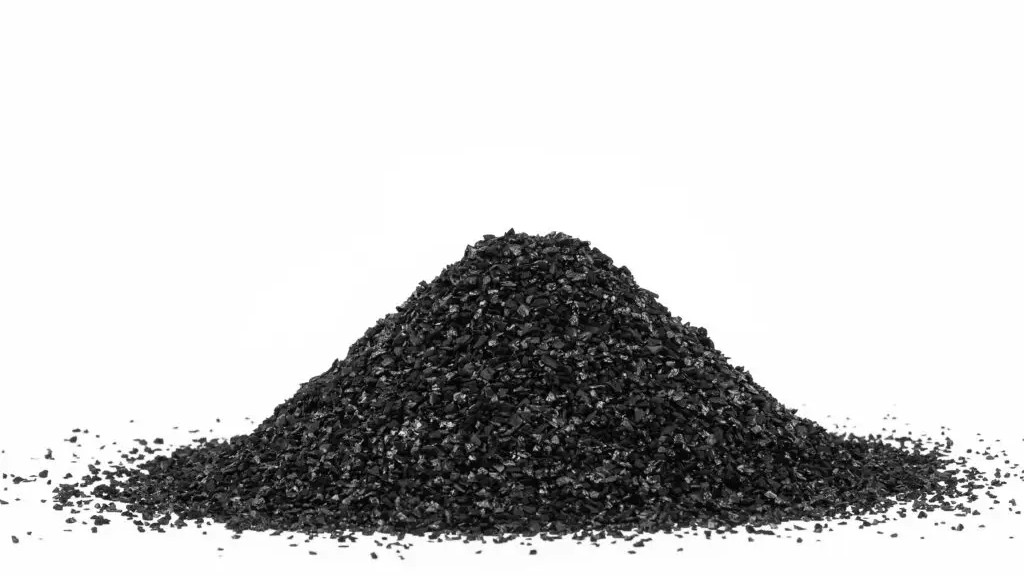
Activated carbon works by adsorption: it fixes free chlorine and its by-products, tastes and odours, as well as some pesticides, solvents and VOCs on its surface. It is the media that turns "drinkable" water into "pleasant" water.
Two main formats:
- Granular carbon (GAC): high flow, low pressure drop · ideal as post-filtration to refine taste.
- Carbon block (CTO): denser and finer, it combines adsorption and fine mechanical filtration; depending on certification, it can reduce lead and certain micropollutants.
⚠️ Carbon protects the membrane
Chlorine attacks reverse-osmosis membranes. A carbon cartridge before the membrane is therefore essential to preserve it. Conversely, on some chlorine-tolerant ultrafiltration membranes, the order may differ.
4. Resin cartridges: limescale and nitrates
Ion-exchange resin cartridges target specific ions:
- Softening resin: exchanges calcium and magnesium for sodium · a point-of-use anti-scale solution, not to be confused with a full regenerating softener.
- Anti-nitrate resin: captures nitrates, useful on well/borehole water in farming areas.
- Demineralising resin (mixed bed): produces near-demineralised water for technical uses (laboratory, steam, batteries).
Cartridge resin has a limited capacity: it saturates and is replaced (it does not regenerate like a softener with a brine tank). It is therefore reserved for low flows or occasional uses.
5. RO membrane & ultrafiltration: the finest
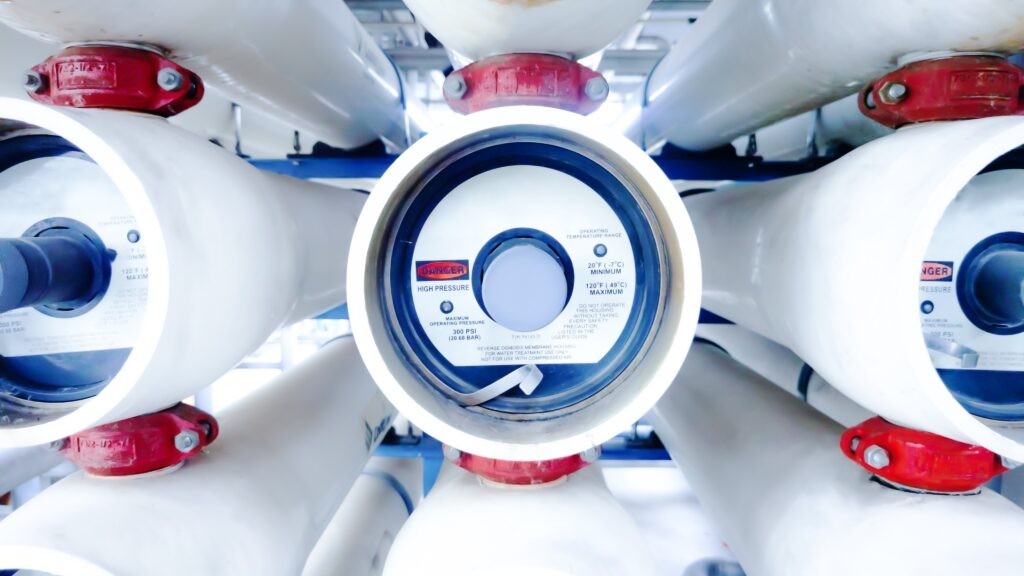
Here you no longer "retain" particles, you separate at membrane scale:
- Ultrafiltration (UF): hollow fibres stop particles, bacteria and viruses (around 0.01–0.02 micron) without demineralising · the water keeps its minerals. Ideal against microbiological risk while preserving taste.
- Reverse osmosis (RO): the finest membrane (≈ 0.0001 micron) removes up to 98–99% of dissolved salts, heavy metals, nitrates, PFAS and micro-organisms. Maximum purification · at the cost of a water reject (concentrate).
The membrane is not a conventional "cartridge" but a component in its own right, always protected upstream by pre-filters (sediment + carbon).
6. Specific cartridges: remineralisation & scale protection
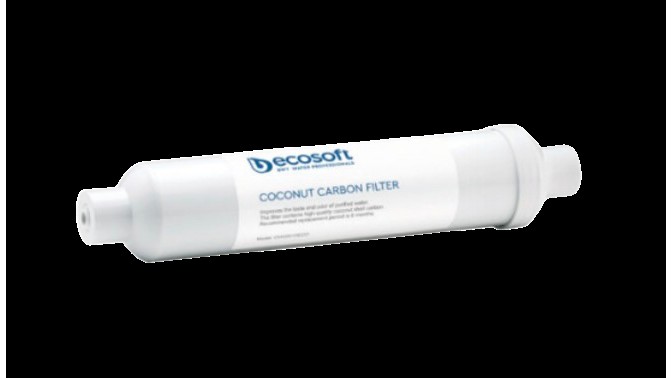
Beyond the classics, some cartridges answer specific needs:
- Remineralising cartridge: placed after an RO unit, it reintroduces minerals (calcium, magnesium) to rebalance very pure water and improve its taste.
- Polyphosphate cartridge: doses a small amount of polyphosphates to limit scaling and corrosion in circuits (process, water heater).
- Bacteriostatic cartridge (silver-impregnated carbon): limits bacterial growth within the media.
- Iron-removal / anti-H₂S cartridge: for water loaded with iron, manganese or hydrogen sulphide (often treated with tank media for higher flows).
7. What should guide your cartridge choice?
The choice is never made "at random from the catalogue". Five criteria structure the decision:
| Criterion | What it determines |
|---|---|
| Water analysis | The contaminant(s) to treat (particles, chlorine, hardness, nitrates, iron, microbes…) · this is the starting point. |
| Micron rating / media type | The fineness and mode of action suited to the targeted problem. |
| Format & housing | Dimensional compatibility: 10" or 20", Slim Line or Big Blue, inline. Must match the housing. |
| Flow & pressure drop | A cartridge that is too fine or undersized causes flow to drop. Size according to use. |
| Capacity & maintenance | Service life (litres / months) and replacement frequency, depending on water load. |
🔗 Format: Slim Line vs Big Blue
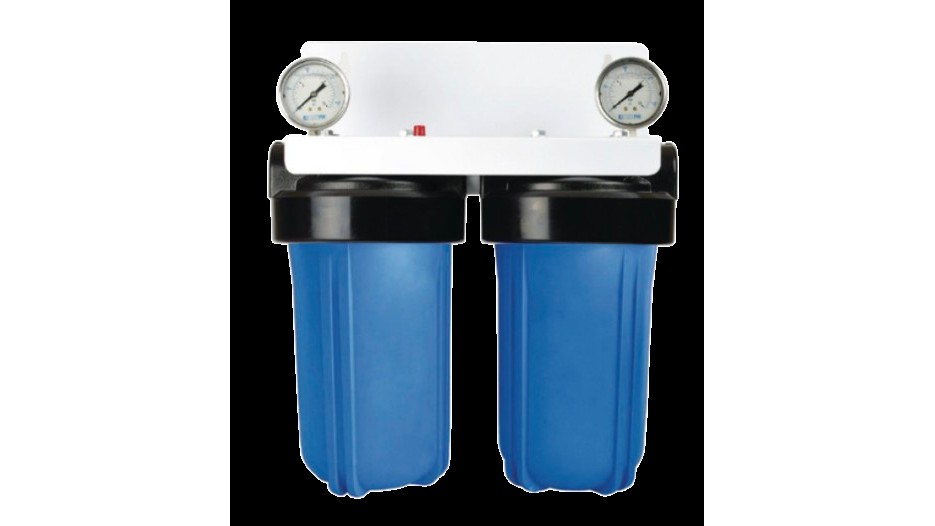
Slim Line cartridges (standard 10"/20") suit low flows and points of use. Big Blue cartridges (large diameter) offer a large filtering surface, high flow and long life · ideal for whole-house or building inlet filtration. The cartridge format must always match that of the housing.
8. Cartridge order: from coarsest to finest
The golden rule of a filtration train: go from coarsest to finest, so that each stage protects the next. A typical RO configuration:
- 1. Sediment (e.g. 5 µm): retains particles.
- 2. Activated carbon: removes chlorine (which would damage the membrane) and tastes.
- 3. RO membrane: fine purification of salts, metals, nitrates, PFAS.
- 4. Post-filter / remineralisation: refines taste and rebalances the water.
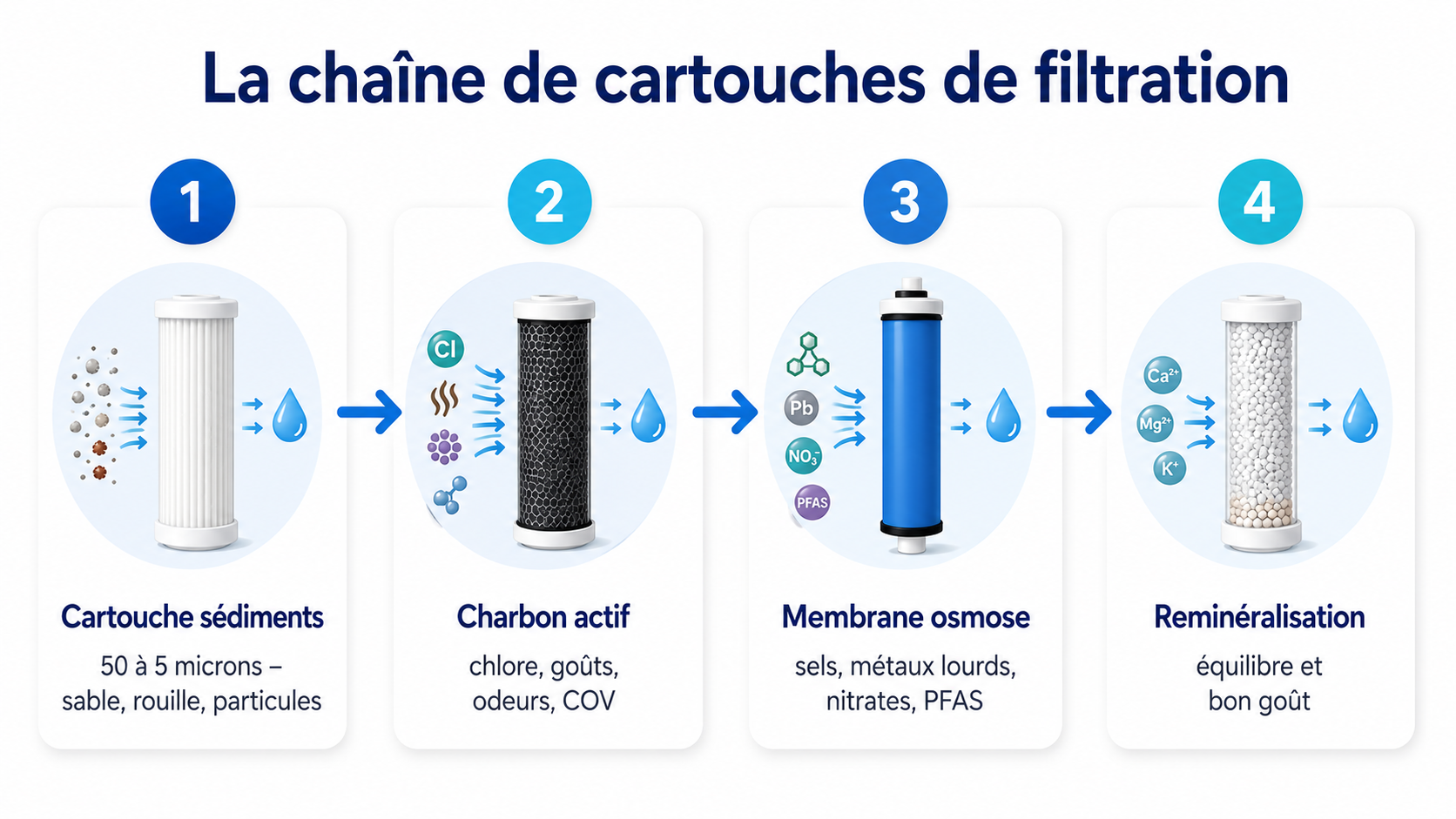
Reversing this order means prematurely clogging the fine cartridges and shortening the membrane's life.
Conclusion: the right cartridge in the right place
There is no "miracle" cartridge, but a logical combination: sediment protects, carbon cleans up taste and chemistry, resin targets specific ions, the membrane purifies deeply, and specific cartridges fine-tune the result. The choice always starts from a water analysis, the housing format and the intended use. And maintenance · regular replacement · is what keeps filtration performing over time.
DIMM distributes all the main families of cartridges and media (Pentair/Pentek, Ecosoft, Everpure, Fileder and associated brands) as well as the matching housings, and supports professionals in choosing and sizing the right solution for each water.
Key points & references
- Four modes of action: mechanical (sediment), chemical/adsorption (carbon), ion exchange (resin), membrane (UF / reverse osmosis).
- Sediment: micron rating 50 → 1 µm; wound, pleated (washable), spun types. Common pre-filtration at 5 µm.
- Carbon: GAC (granular, flow) and CTO block (finer, also reduces certain impurities). Protects the membrane from chlorine.
- Resin: softening, anti-nitrate, demineralising · limited capacity, to be replaced (not regenerating like a softener).
- Membranes: UF ≈ 0.01–0.02 µm (microbes, without demineralising); reverse osmosis ≈ 0.0001 µm (98–99% of impurities).
- Choice: water analysis, micron rating/media, format (Slim Line / Big Blue / inline), flow, capacity & maintenance. Order: coarsest to finest.