


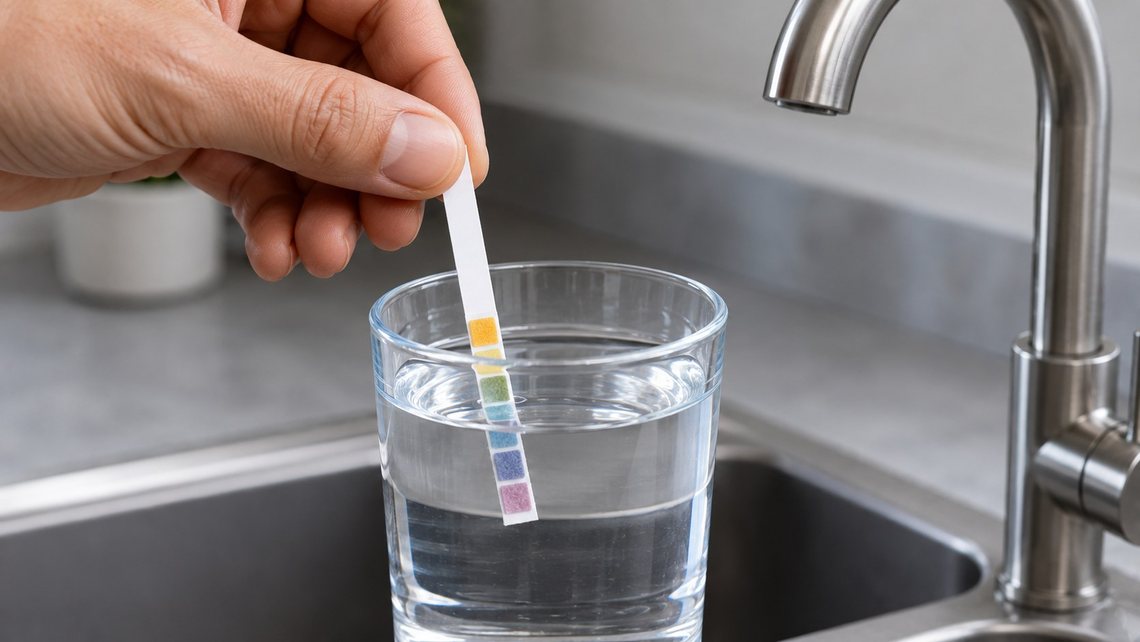
TH (total hardness, "titre hydrotimétrique"), expressed in French degrees (°f), measures water hardness, i.e. its calcium and magnesium content. A water softener lowers this TH to protect installations from limescale. Logically, many customers think it should go… as low as possible.
That is a mistake. Setting a softener to 0 °f is neither recommended nor beneficial in the vast majority of cases. Completely softened water becomes aggressive, less pleasant and wastes salt. The right answer comes down to two words: residual hardness.
1. TH, and why it is adjusted
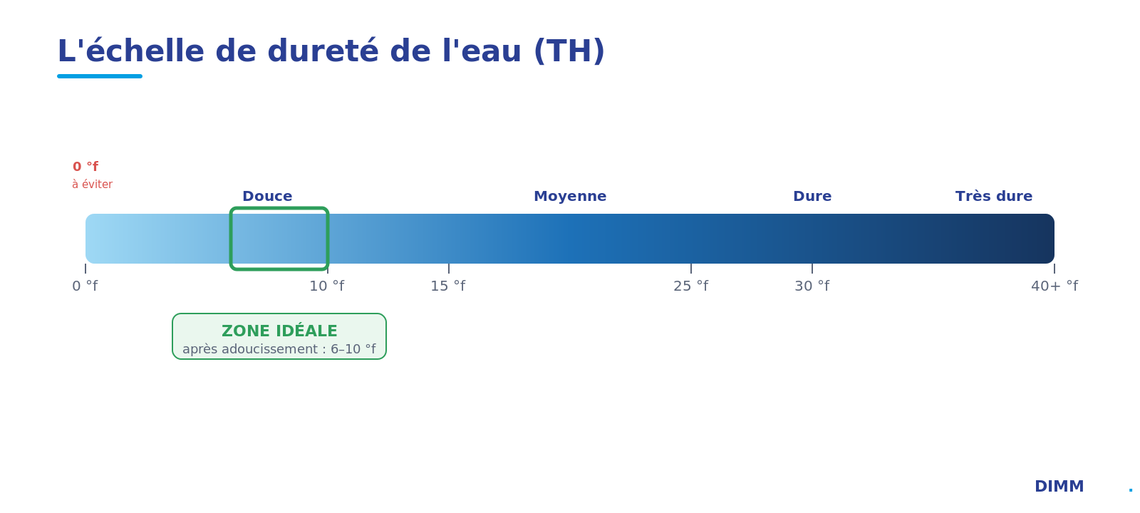
The higher the TH, the harder and more scale-forming the water. Water is considered soft below ~15 °f and hard above ~25-30 °f. A softener lowers TH by ion exchange (calcium and magnesium are replaced by sodium).
But the goal is not to remove all hardness: it is to bring it back into a controlled range that protects against limescale without creating other problems. This range is set using the blending valve (bypass), which doses the share of raw water reintroduced into the softened water.
2. Why you should not aim for 0 °f
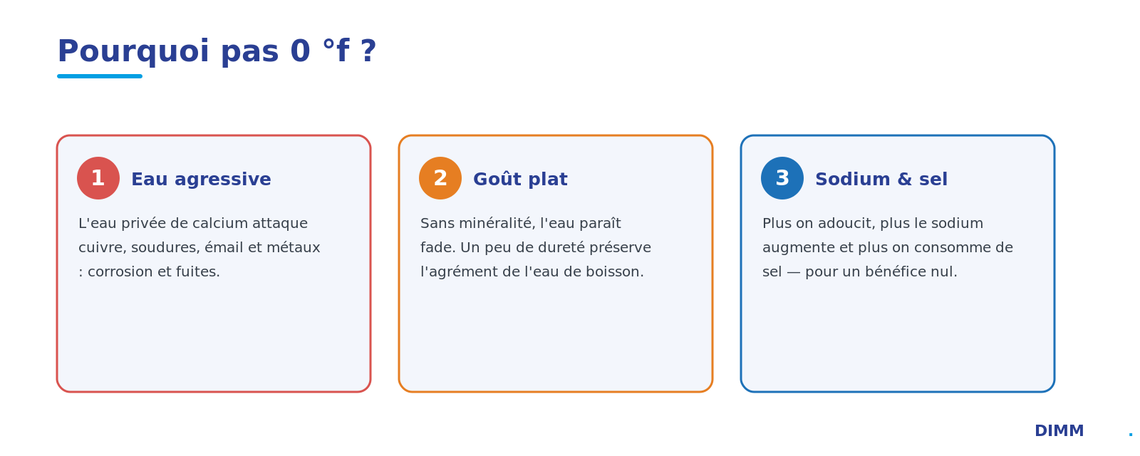
Water set to zero is not "purer": it is unbalanced. Three concrete reasons to keep some residual hardness:
Aggressive, corrosive water
Deprived of calcium, water becomes aggressive: it seeks to remineralise by attacking what it flows through, copper pipes, solder joints, cylinder enamel, metal components. Over time: corrosion, leaks and premature wear of installations. A little mineral content, on the contrary, protects the network.
A flat taste
Calcium and magnesium contribute to the taste of water. Water at 0 °f tastes bland, "flat". Keeping some hardness preserves the enjoyment of drinking water.
More sodium, more salt
Softening replaces calcium with sodium: the more you soften, the higher the sodium content, a point to watch for low-salt diets. Aiming for 0 °f also means using more regeneration salt for no benefit, or even a negative one.
3. The ideal target: controlled residual hardness
In practice, professionals set softened water to a residual hardness of around 6 to 10 °f (often ~7-8 °f). This range offers the best compromise:
- Anti-scale protection maintained for appliances and pipework.
- Non-aggressive water: networks and the hot water cylinder are protected from corrosion.
- Pleasant taste and mineral content every day.
- Optimised salt consumption, with no needless over-softening.
| Outlet hardness | Effect | Recommendation |
|---|---|---|
| 0 °f | Aggressive water, flat taste, high sodium | Avoid (except for specific industrial processes) |
| 6-10 °f | Anti-scale + non-aggressive + good taste | ✔ Recommended target (residential & commercial) |
| > 15 °f | Insufficient anti-scale protection | Increase softening (check the setting) |
4. How to adjust: the blending valve
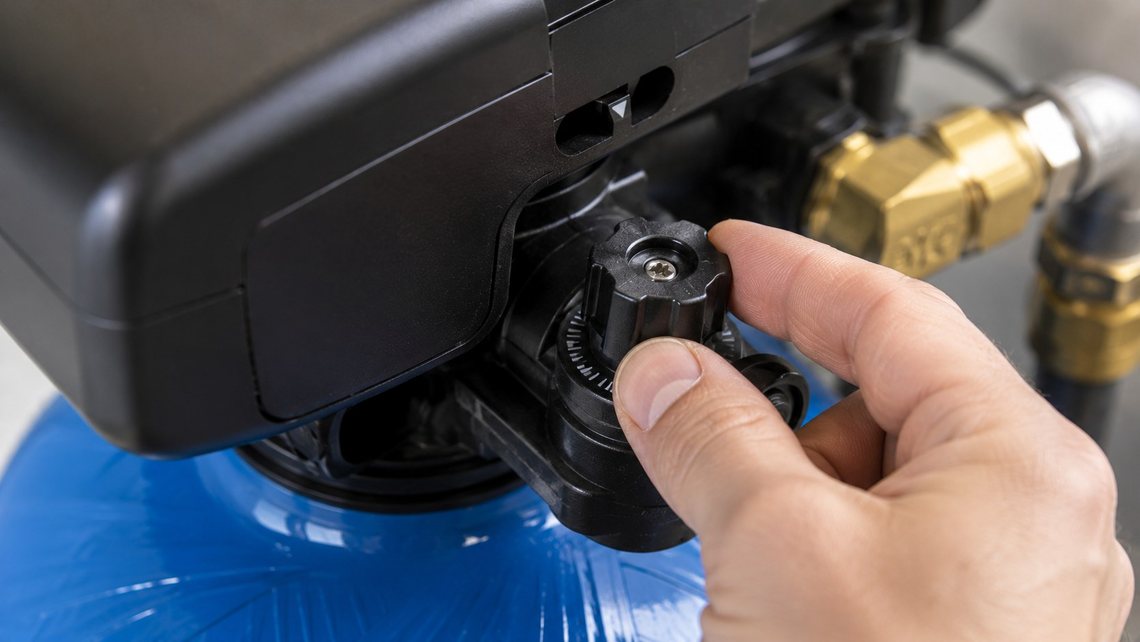
Outlet TH is set with the softener's blending valve (bypass): it reinjects a small share of raw water into the softened water to reach the desired residual hardness. The method is simple:
- Measure the TH of the raw water, then the TH at the softener outlet (test strip or drop test kit).
- Adjust the blending valve until the target is reached (~6-10 °f).
- Re-check once stabilised, and during maintenance visits.
The exception: certain industrial uses
For specific processes (steam boiler feed, certain industrial applications), water with near-zero hardness is required. These cases call for dedicated sizing, distinct from domestic and sanitary use, where residual hardness remains the rule.
5. Key points for advising your customers
The "0 °f = better" reflex is one of the most persistent misconceptions about softening. Answering it clearly means protecting the customer's installations, giving them pleasant water and optimising their salt consumption, while demonstrating your expertise.
DIMM solutions, setting & control
- DIMM water softeners with built-in blending valve for precise residual hardness adjustment.
- TH test kits (strips, reagents) to measure raw and softened water.
- Technical support: sizing, configuration and maintenance.
- Our water softeners · Sizing a professional softener · Water softener salt
Conclusion: aim right, not zero
No, a softener should not be set to 0 °f. The right target is a residual hardness of around 6 to 10 °f: low enough to stop limescale, mineral enough to protect pipework, taste and sensible salt use. The key is the blending valve, and regular checks of outlet TH.
DIMM's teams support installers, distributors and partner resellers in setting, checking and maintaining water softeners, in France and Belgium.
Key facts & references
- Usual residual hardness after softening: ≈ 6 to 10 °f (often 7-8 °f) according to professional recommendations.
- Water with too low a hardness (close to 0 °f) becomes aggressive and promotes network corrosion.
- Softening replaces calcium with sodium: a point to watch for low-salt diets.
- Exception: some industrial processes (steam boilers) require near-zero hardness.