

DIMM follows the 2026 Tour de France
Across 23 days of racing, DIMM backs you with two promotional offers and live standings. Stay in the lead group!

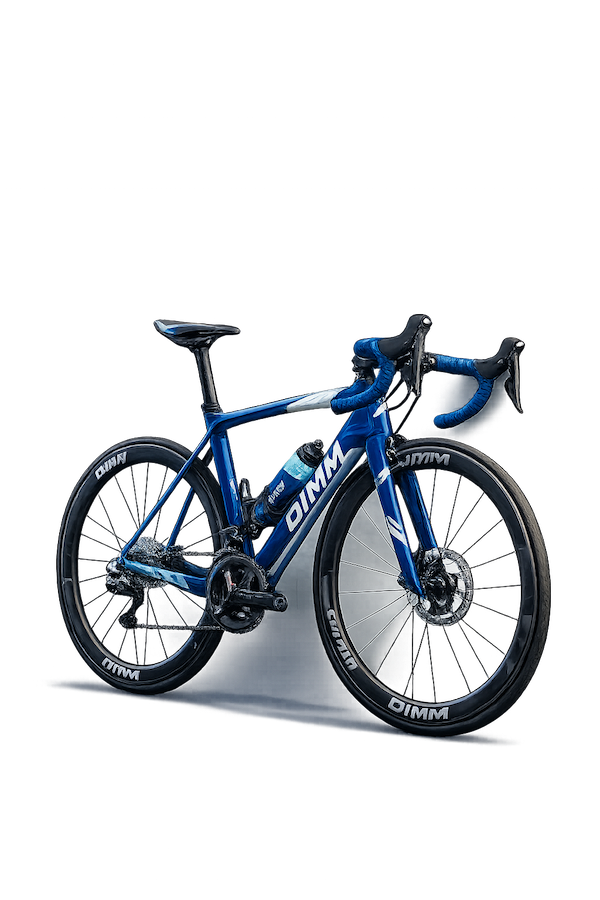
Like a rider, your installations run on quality water. For the 113th Tour de France, DIMM is running two exclusive offers for professionals and tracks the race stage by stage: jerseys, stage winners and general classification, updated daily.
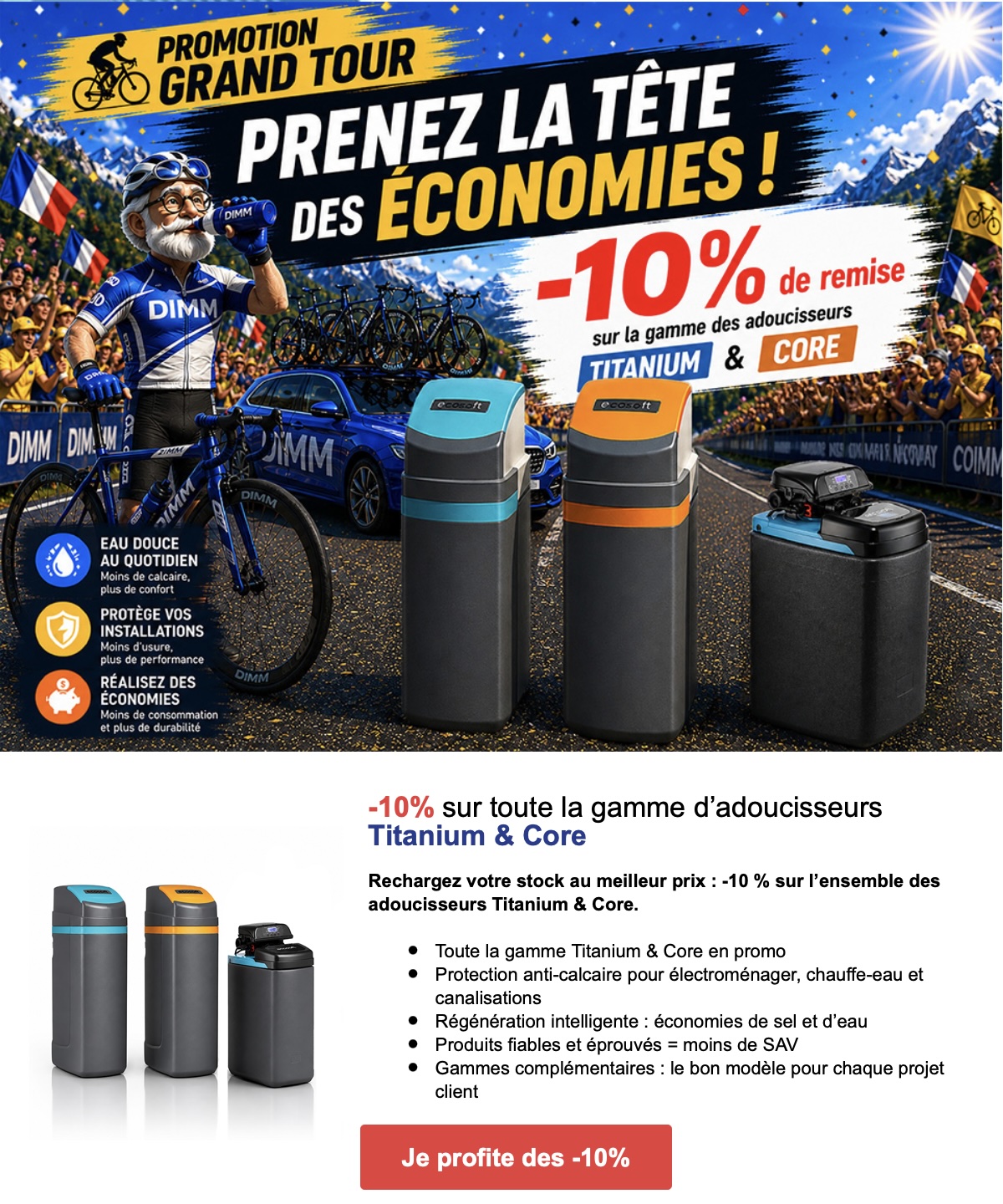
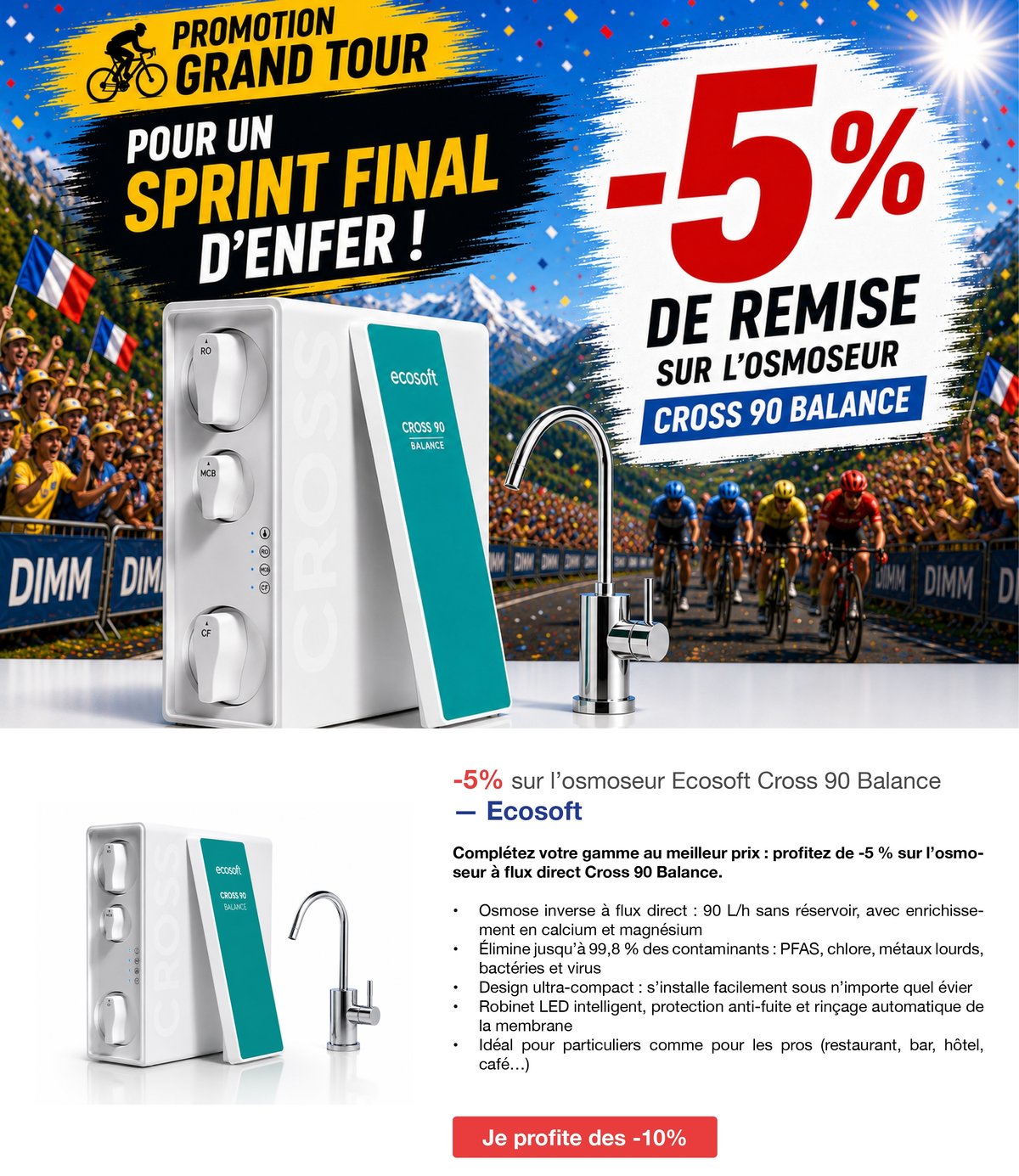
Offer 1 — First fortnight
Offer revealed on Tuesday 7 July at 8:00 am.
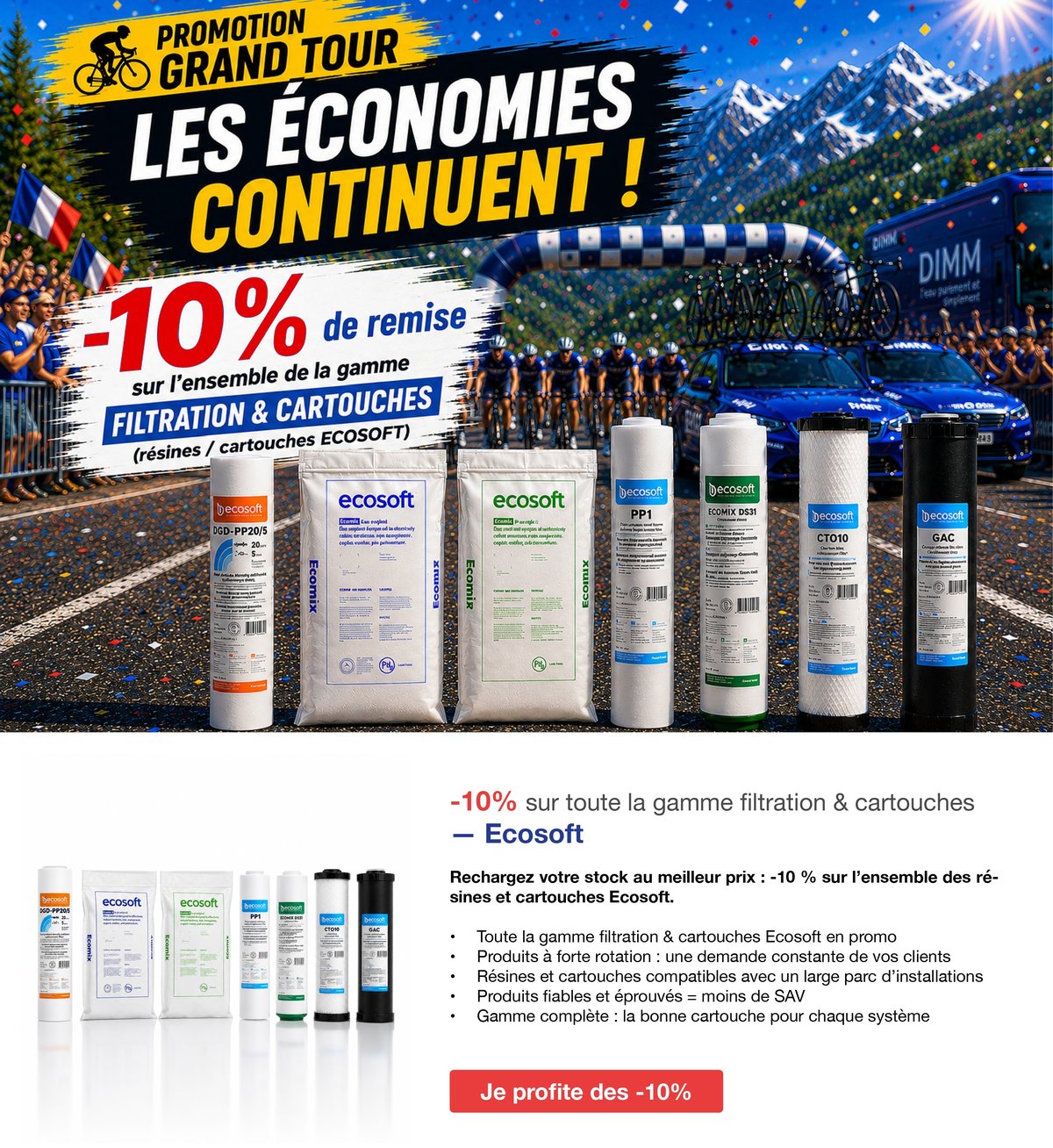
Offer 2 — Second fortnight
For the second half of the Tour, DIMM applies three combinable offers on filtration, reverse osmosis and scale protection. Click a visual to open the product sheet.

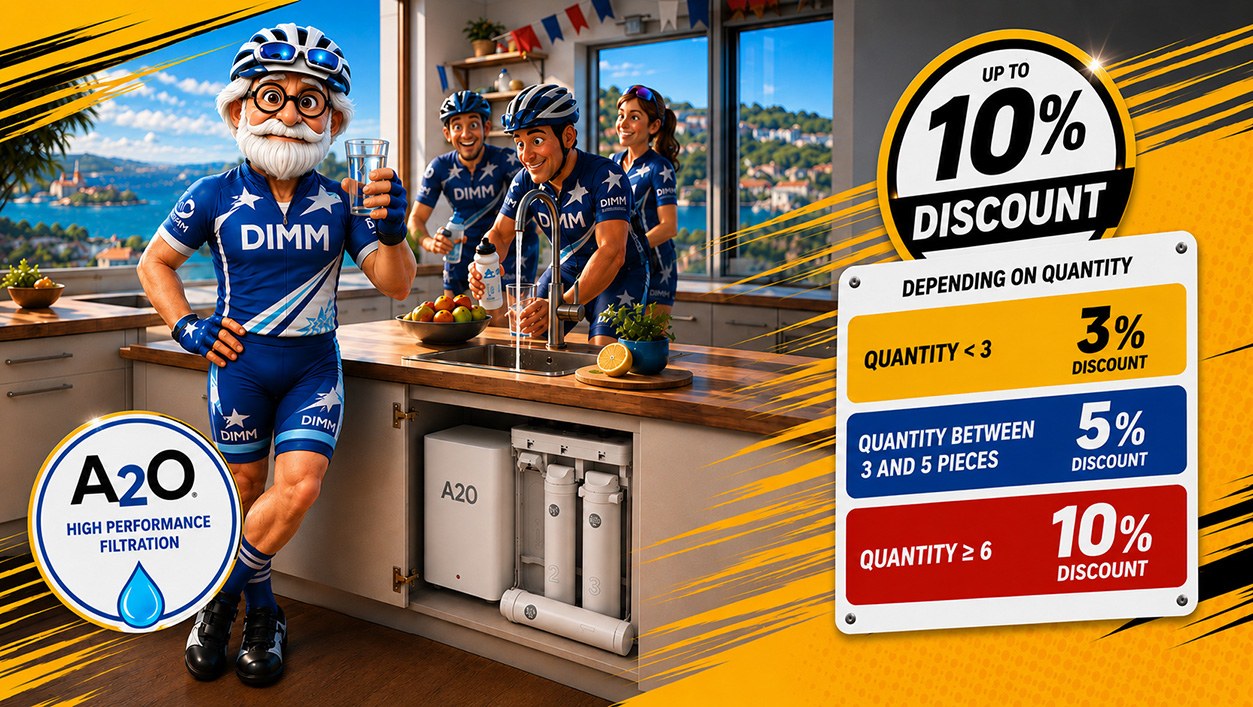
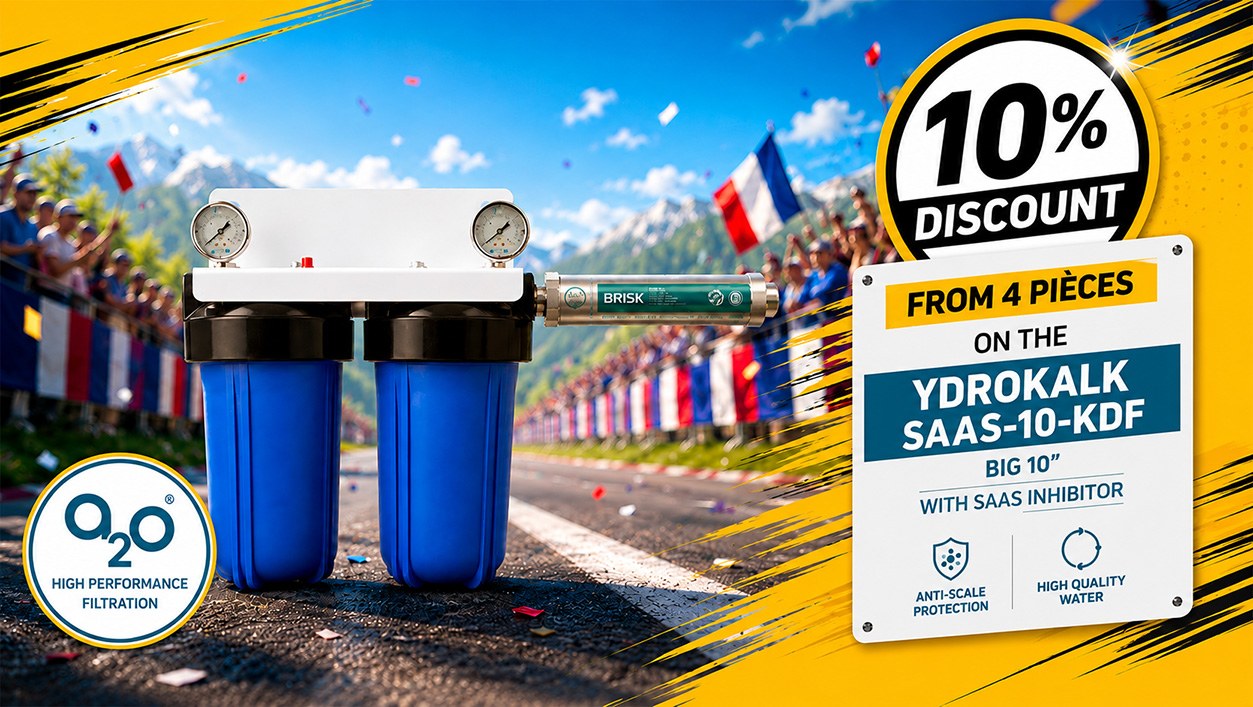
*Offers for professionals only, valid 16–26 July 2026 inclusive, while stocks last. Non-contractual visuals.

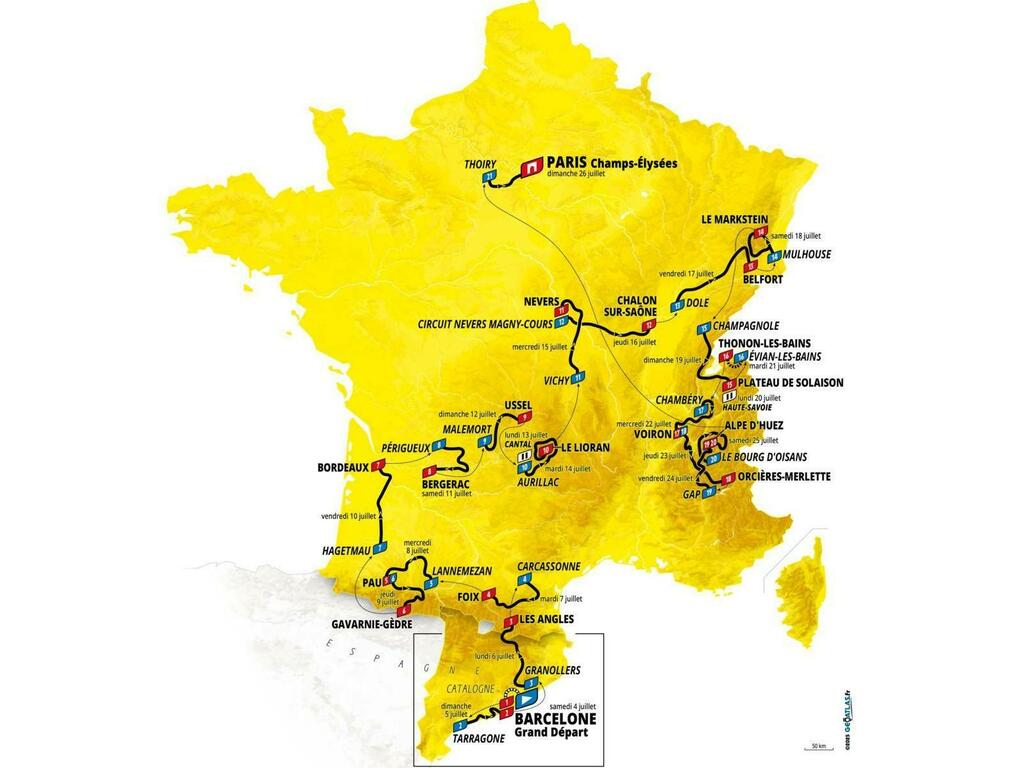
- Sat 4 Jul — Grand Départ in Barcelona (Catalonia)
- 7 → 9 Jul — Pyrenees: Foix, Pau, Gavarnie-Gèdre
- 13 → 14 Jul — Massif Central: Le Lioran, Aurillac
- 17 → 18 Jul — Jura & Vosges: Dole, Le Markstein, Mulhouse
- 21 → 25 Jul — Alps: Plateau de Solaison, Alpe d'Huez
- Sun 26 Jul — Final finish in Paris Champs-Élysées
Indicative highlights of the official route (113th edition, 21 stages). Stage-by-stage detail coming soon.
The Tour crosses terroirs with very different waters. For DIMM, each region is a field of expertise — hardness, source of the resource, treatment challenges.
Catalonia — Grand Départ
Mediterranean climate and limestone soils: often hard water and a resource under summer stress. Softening and scale protection are essential.
Pyrenees & Occitanie
Soft mountain water at altitude that quickly picks up limescale in the plains. Pre-filtration then softening depending on the source.
Nouvelle-Aquitaine — Bordeaux, Périgueux, Pau
Limestone aquifers and boreholes: frequently hard water, watch for nitrates and pesticides in farming areas. Softener + activated carbon.
Massif Central — Cantal, Le Lioran
Volcanic and granitic bedrock: naturally soft, low-mineral water (the land of Vichy waters). Little limescale, sometimes slight aggressiveness to correct.
Burgundy–Franche-Comté & Jura
Karstic limestone massifs: hard water and possible turbidity after rain. Softening + particle filtration.
Alsace & Grand Est — Mulhouse, Le Markstein
Vast Rhine aquifer: abundant resource but hard water, locally high in nitrates. A full treatment chain is recommended.
Alps & Haute-Savoie
Quality mountain water, soft to moderately hard depending on the source. Pre-filtration and UV disinfection on isolated networks.
Île-de-France — Paris finish
Very calcareous Paris basin: among the hardest water in France. Softening is almost unavoidable.
Indicative regional hydrogeological trends — real hardness and quality are always measured at the point of use.
Take advantage of DIMM's Tour de France offers: contact your sales rep or browse our products and resources.