

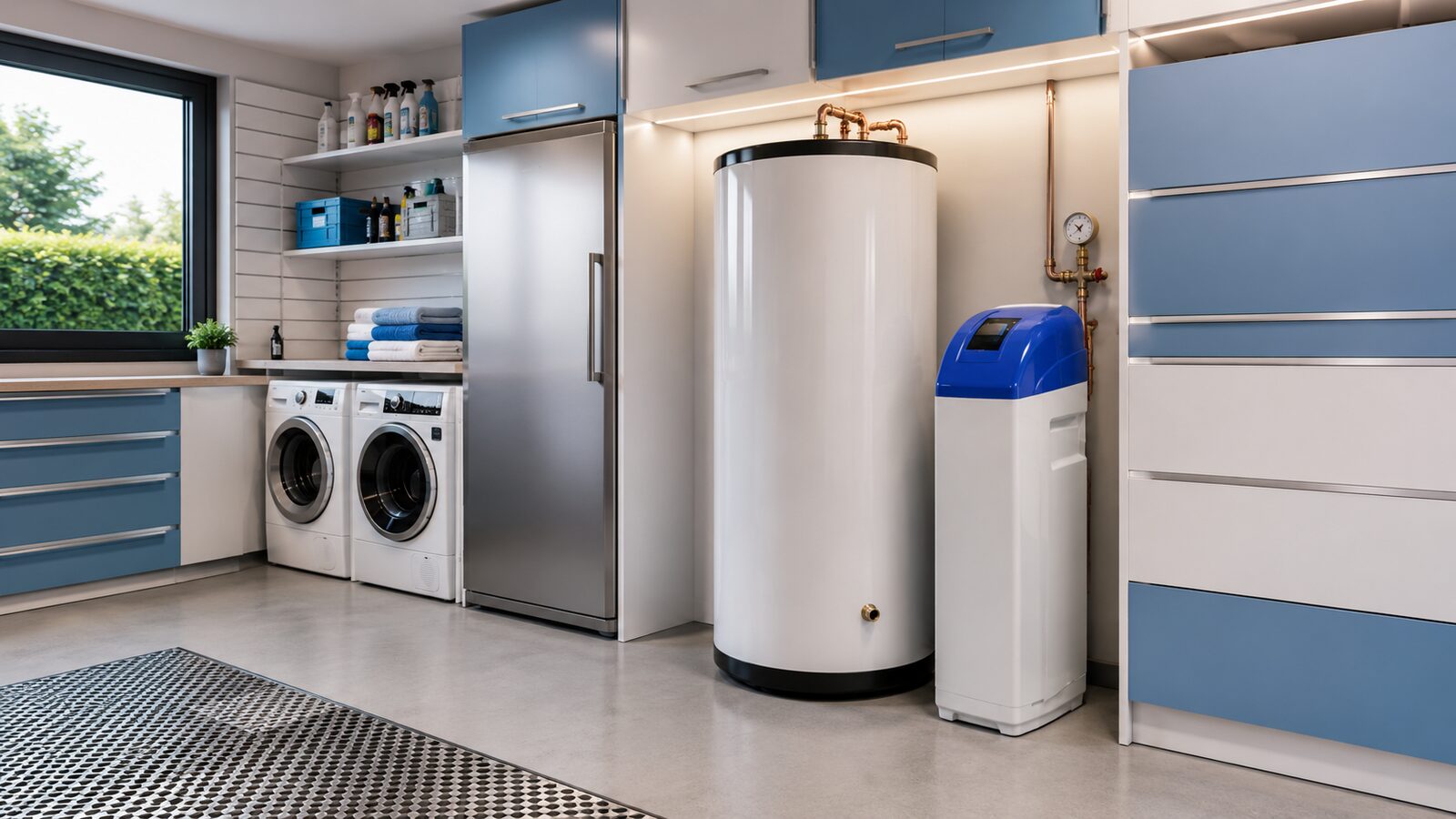
As spring temperatures rise and summer approaches, domestic hot water (DHW) consumption increases. This is also the period when poorly maintained systems start failing: scaled-up tanks, burnt heating elements, lukewarm or insufficient hot water.
Spring is the strategic window for auditing, maintaining and optimising DHW systems – before the summer consumption peaks expose the weaknesses of an installation. For water treatment professionals, it is also a major commercial opportunity: your clients are receptive to arguments about energy savings, comfort and equipment protection.
This article explains why limescale is the number one enemy of DHW in summer, the DIMM solutions to fight it effectively, and the complete spring maintenance checklist for your clients.
1. Why summer is the most demanding season for DHW
Consumption up, equipment under pressure
Domestic hot water accounts for up to 20% of the energy bill of a household or commercial establishment according to ADEME. In summer, shower frequency increases, tourist establishments reach peak occupancy, and equipment runs continuously. A scaled hot water tank consumes up to 25% more energy compared to clean equipment.
Limescale: the problem worsens with heat
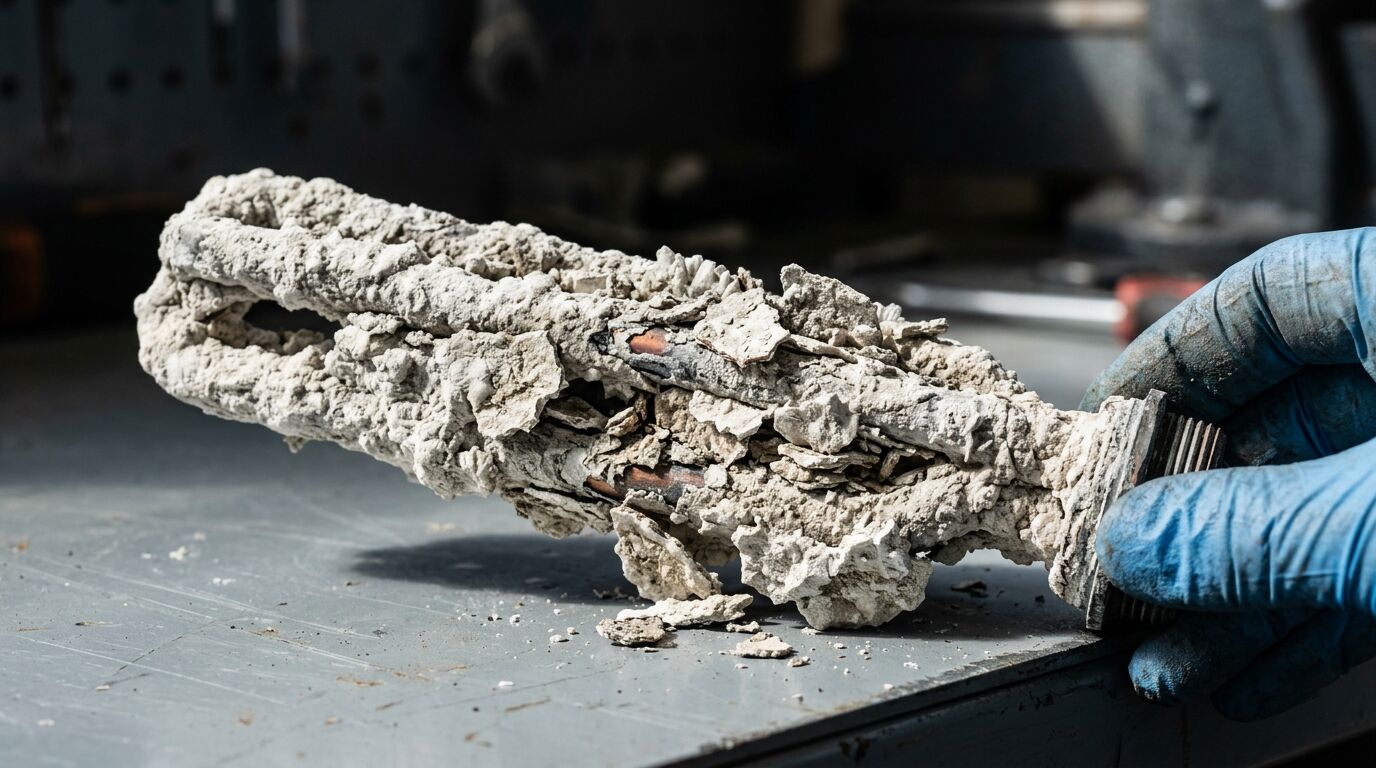
Scale formation is directly linked to water temperature: in hard water (> 26 °F), scale formation is twice as high at 65°C compared to 55°C, and can be up to six times higher at 75°C. In summer, as temperatures and heating cycles increase, scaling accelerates significantly in tanks and heat exchangers.
The real cost of limescale – hard numbers
- 1 mm of scale on the element – +10% electricity consumption
- 2 mm of scale – +15 to 25% excess electricity consumption
- 3 mm of scale – up to +25% wasted energy
- Lifespan reduced by 20 to 30% for unprotected appliances
- Cost of a DHW tank breakdown in peak season: €800 to €2,500 (equipment + emergency call-out)
2. Limescale impact by water hardness
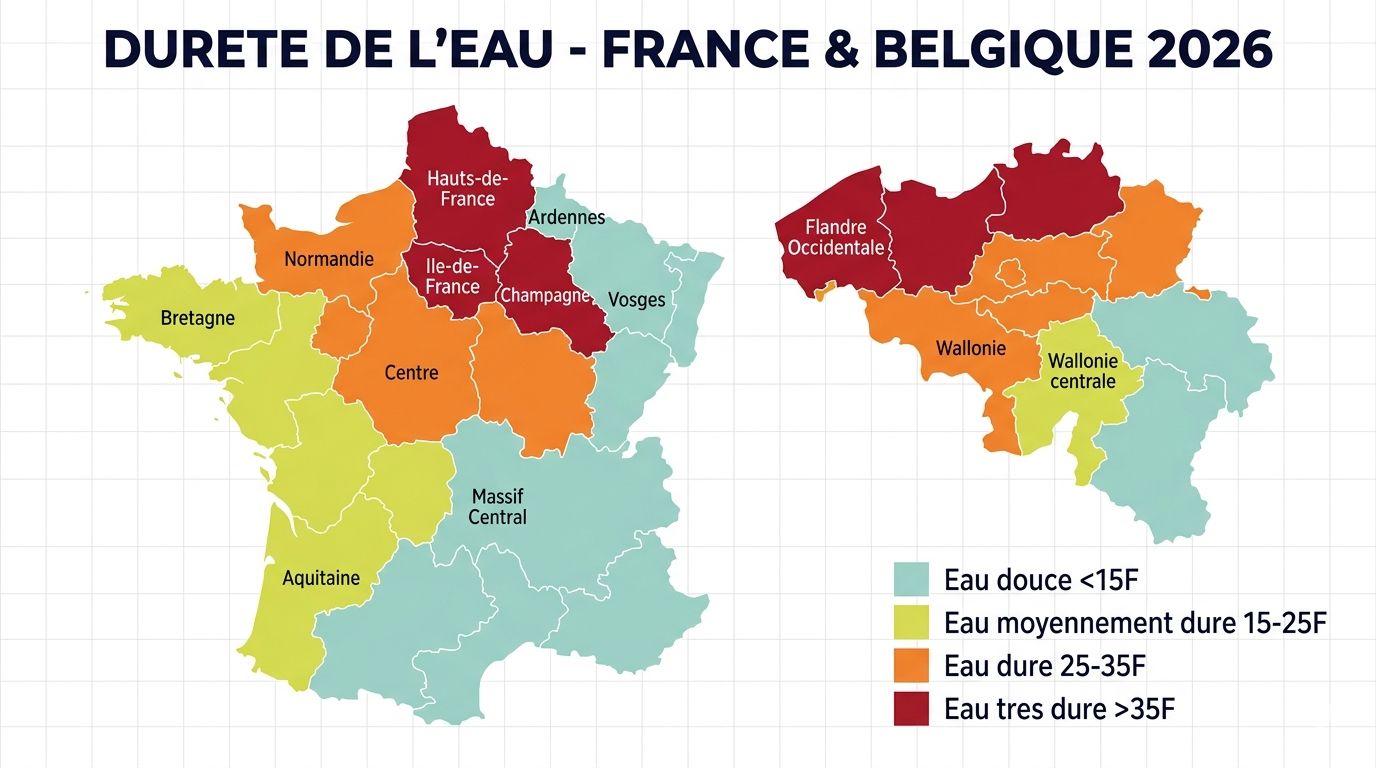
Water hardness (TH – measured in °F) varies greatly by region. In France and Belgium, many areas have hard to very hard water, particularly in the North, Île-de-France, Champagne and Flanders.
| Hardness (TH) | Water quality | DHW scaling | Energy surcharge | Equipment impact |
|---|---|---|---|---|
| < 15 °F | Soft water | Low | Low | Water heater lasts 20+ years |
| 15 – 25 °F | Moderately hard | Moderate | Moderate | Progressive scaling 5-10 years |
| 25 – 35 °F | Hard water | High | Significant | Elements clogged in 3-5 years |
| > 35 °F | Very hard water | Very high | Elevated | Breakdown within 2-3 years without treatment |
3. DIMM anti-limescale solutions for DHW
| Solution | Effectiveness | Install cost | Key remark |
|---|---|---|---|
| Resin softener (ion exchange) | Reference | Moderate | Physically removes Ca²⁺ and Mg²⁺. Truly soft water. Salt regeneration. Reference solution. |
| Ydrokalk / physical anti-scale (no salt) | Complementary | Low | Does not remove Ca/Mg but modifies their crystallisation. Complementary solution. |
| Polyphosphate inhibitors | Localised | Low | Localised protection (pipes, tanks). Combine with a softener for complete DHW coverage. |
Resin softener: the reference solution
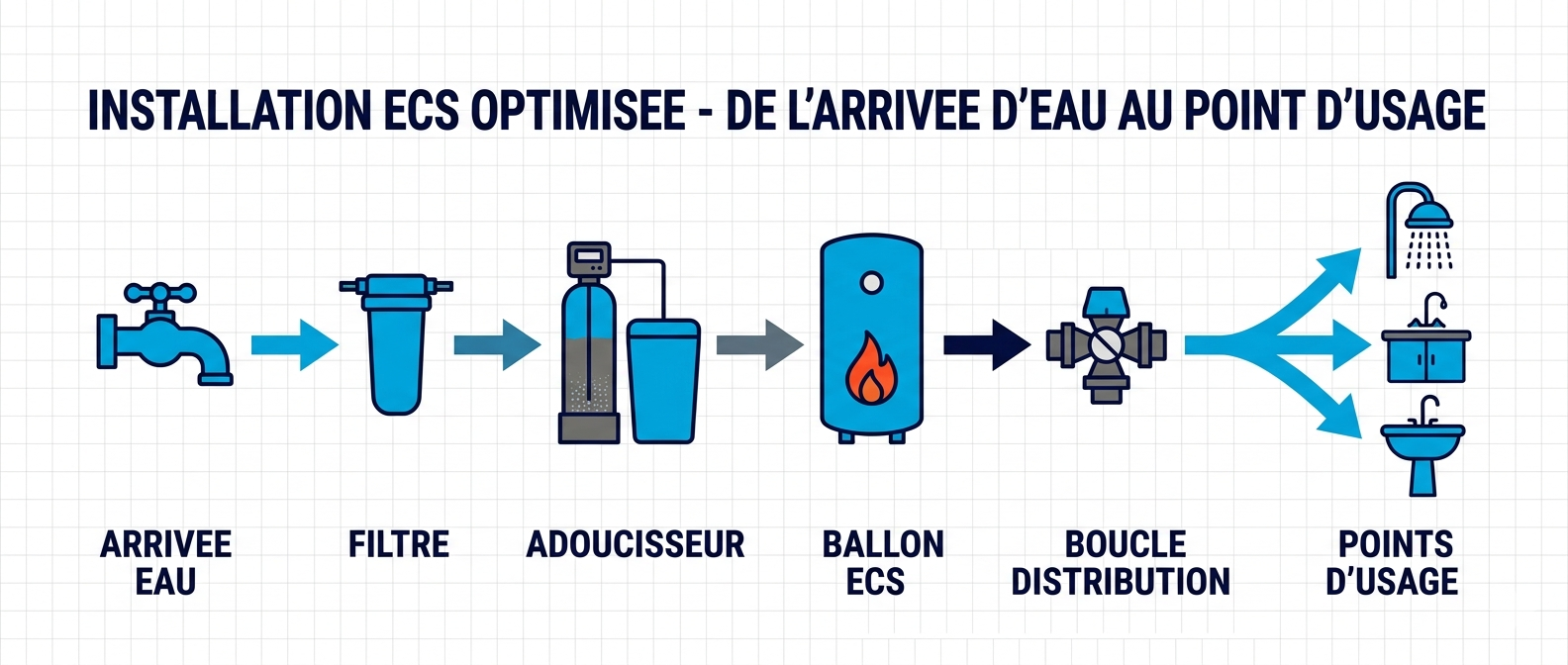
The ion exchange resin softener is the most effective and durable solution for protecting DHW systems from limescale. It physically removes calcium (Ca²⁺) and magnesium (Mg²⁺) ions responsible for hardness by exchanging them for sodium ions.
The choice between time-clock softener (regeneration at fixed intervals) and volumetric softener (regeneration triggered by actual treated volume) is crucial in a professional context. Volumetric softeners are strongly recommended: they adapt regeneration to consumption variations, save salt and water, and guarantee consistently softened water regardless of usage.
Ydrokalk and inhibitors: complementary solutions
For installations where a resin softener is not possible (limited space, network constraints, budget), Ydrokalk and anti-scale inhibitors offer protection. These devices modify limescale crystallisation to limit its adhesion on internal surfaces. They work well for localised protection (tanks, heat exchangers, sensitive points).
4. Softener maintenance: essential steps before summer
A poorly maintained softener can deliver water as hard as before it was installed: saturated resin that no longer regenerates, empty salt tank, faulty valve. Spring is the ideal time for a complete overhaul before summer consumption peaks expose installation defects.
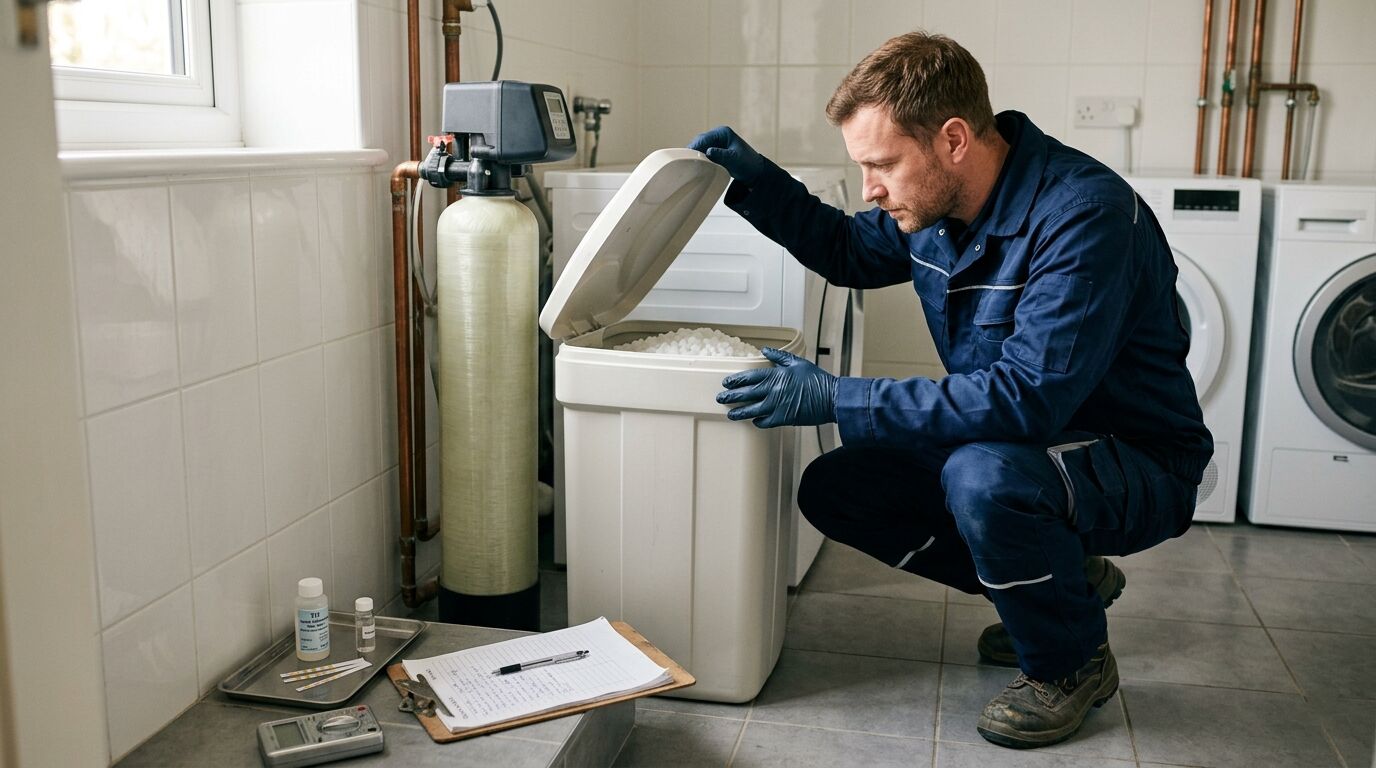
4 signs your softener needs maintenance
- Hard water: limescale traces on taps, dry skin and hair, soap that lathers less.
- Excess salt consumption: refilling much more frequently – sign of an inefficient regeneration cycle.
- Unusual noises from the valve during cycles.
- Poorly drained brine tank or presence of a solidified salt bridge.
5. DHW / softener maintenance checklist before summer
| Maintenance action | Frequency | Why it's critical |
|---|---|---|
| Check salt level in brine tank | Monthly | Critical – the softener doesn't work without salt |
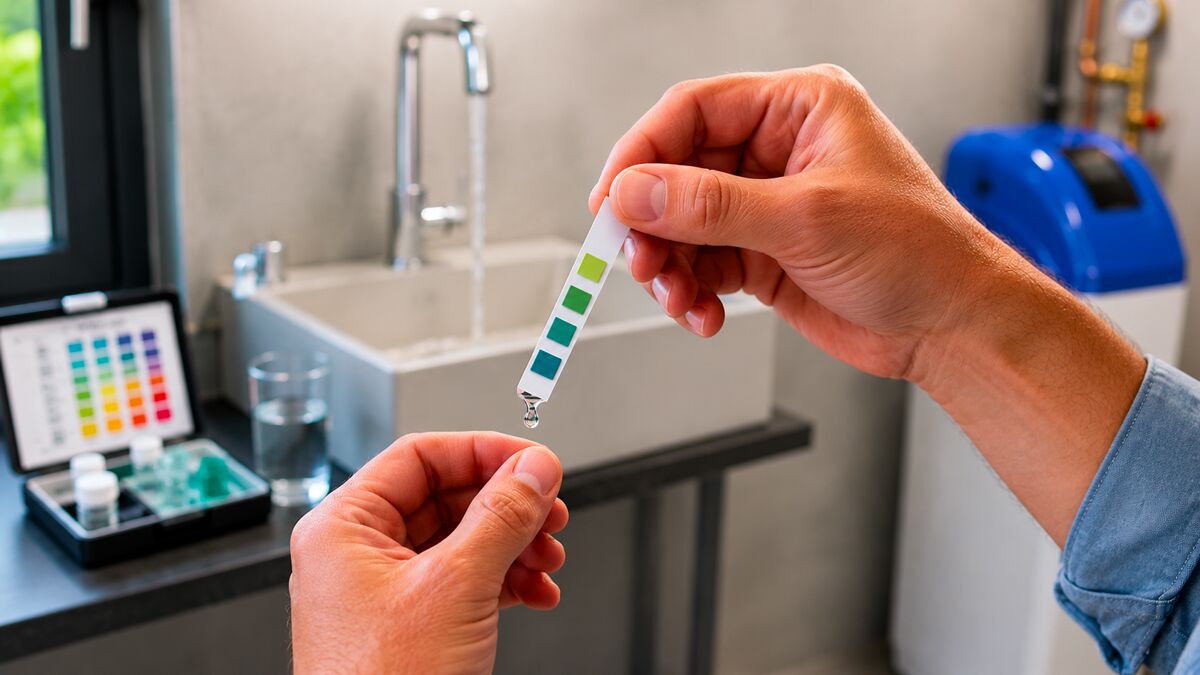
| Test softened water hardness (TH kit) | Monthly | Target: 5–10 °F – if > 15 °F, check the resin |
| Inspect fittings and pipes – visual leaks | Monthly | Water damage prevention |
| Clean the brine tank | Annual (spring) | Prevents build-up of deposits harmful to dissolution |
| Disinfect the resin | Every 1 year | Prevents bacterial growth in the resin |
| Check valve settings | Annual | Adjust if consumption has changed – salt savings |
| Check bypass valve | Annual | Enables isolation during maintenance |
| Replace wear parts (seals, cartridges) | As needed | Prevents breakdowns during peak summer season |
6. Priorities by installation type before summer
Hotels, campsites and tourist accommodation
For accommodation establishments, the combination of a professional softener + high-capacity DHW tank, well maintained, is essential. The winter closure period often creates a salt bridge in the brine tank (the salt has solidified and the block prevents dissolution). It must be emptied and cleaned.
In very hard water areas (> 30 °F), preventive descaling of the DHW tank is essential every spring. Campsites in particular, with their heavily used sanitary blocks in summer, must test and adjust the target residual hardness (ideally 7–10 °F) before the season.
Residential buildings and condominiums
In apartment buildings, a collective point-of-entry (POE) softener protects the entire network. Spring maintenance should include: checking regeneration, testing residual hardness at multiple outlets, inspecting the salt tank and replacing wear parts if the installation is over 3 years old.
Individual houses and residential installations
For the residential market, offer your clients a maintenance contract. The argument is simple: a well-maintained softener saves 10 to 25% on the hot water bill, extends equipment lifespan by 30% and eliminates limescale traces – tangible, immediately noticeable benefits.
7. Commercial opportunity for installers
Beyond the technical aspect, spring is the ideal period to offer new equipment or annual maintenance contracts to your clients. The arguments are solid and immediately understandable:
- Immediate energy savings: up to 25% on the DHW bill from the first year, quickly justifying the investment.
- Equipment protection: lifespan increased by 30% – clear ROI argument for professionals.
- Improved comfort: softer skin, smoother hair, brighter laundry, fewer household products needed.
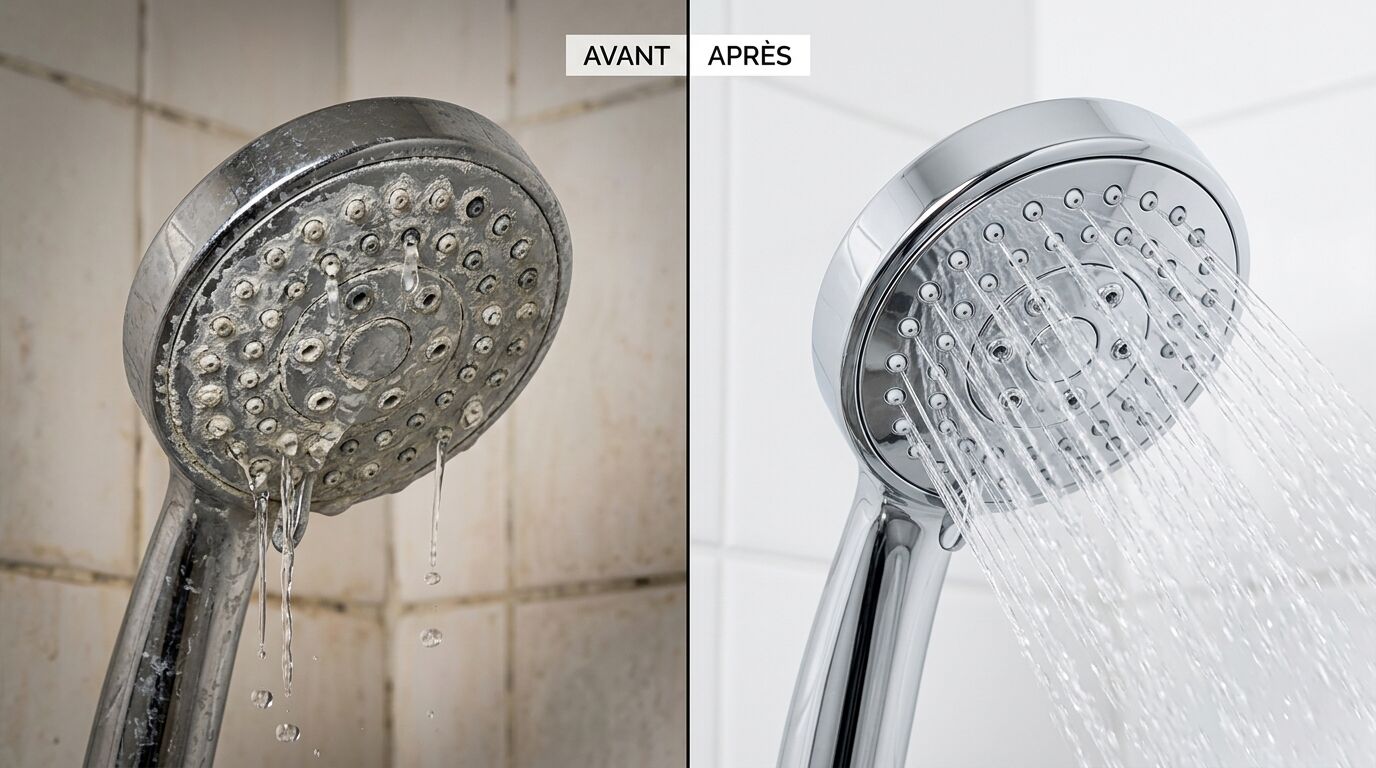
- Zero limescale traces: taps, shower screens, dishes – visible result valued by the end user.
- Legionella compliance: a clean, scale-free network reduces legionella risk (synergy with health prevention).
DIMM supports its resellers and installers with comprehensive technical expertise, marketing materials and responsive support.
Conclusion: act before summer, not after
The DHW system is one of the most heavily used in homes and commercial buildings. It is also one of the most neglected – until the breakdown occurs in the middle of August, in a fully booked hotel or an overloaded condominium.
Preparing your DHW system before summer means preventing 80% of summer breakdowns, saving on the energy bill from the first months, and providing clients or residents with optimal comfort throughout the season. Anti-limescale softening is the most profitable investment you can recommend.