

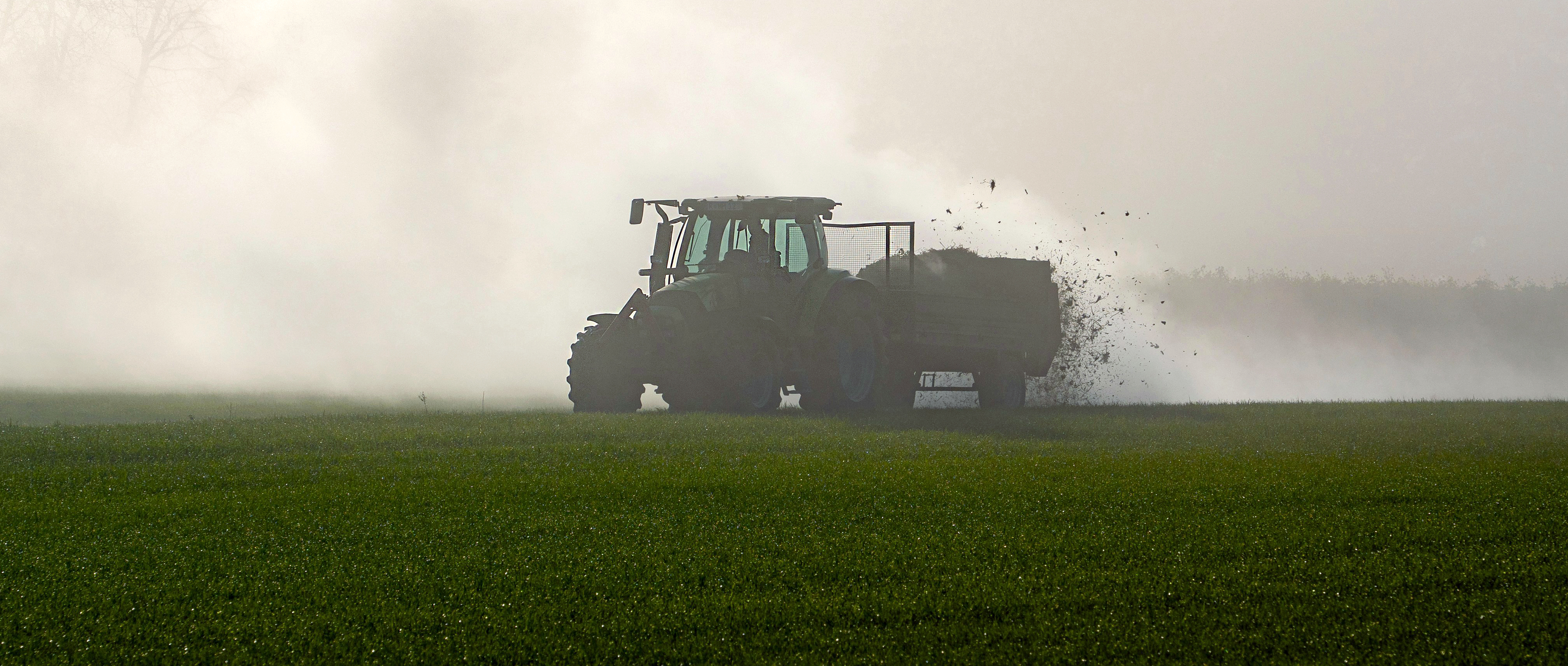
Every spring, an often invisible phenomenon occurs beneath our feet: nitrogen fertilizer applications on agricultural land release significant quantities of nitrates that seep into the soil, reach groundwater aquifers, and can contaminate groundwater and private wells. For water treatment professionals, spring is a season to monitor particularly carefully.
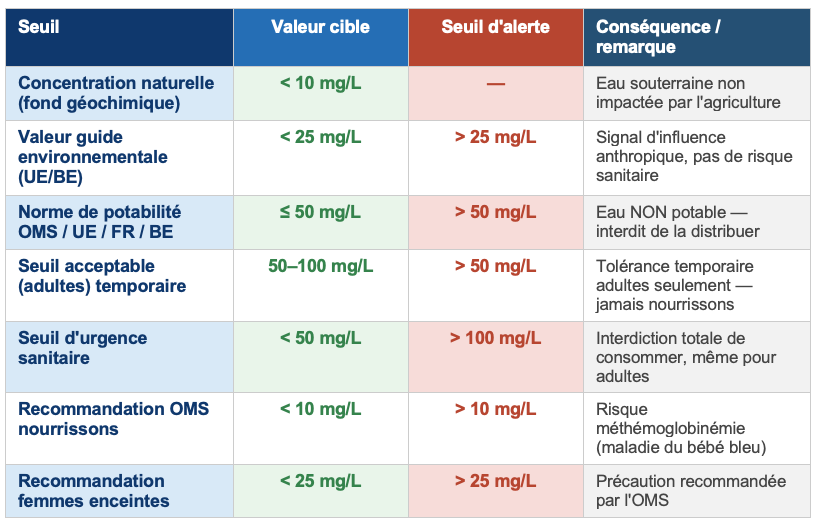
Far from being an anecdotal problem, spring contamination of water by nitrates affects millions of households in France and Belgium, particularly in intensive agricultural areas. Concentrations reaching 100 mg/L – double the drinking water standard of 50 mg/L – have been measured in certain regions.
This article explains the mechanisms of this seasonal contamination, health risks for your customers, current regulations, and DIMM solutions to effectively protect your customers' installations – private individuals, professionals, communities in sensitive areas.
1. Why do nitrates increase in spring?
The mechanism of seasonal infiltration
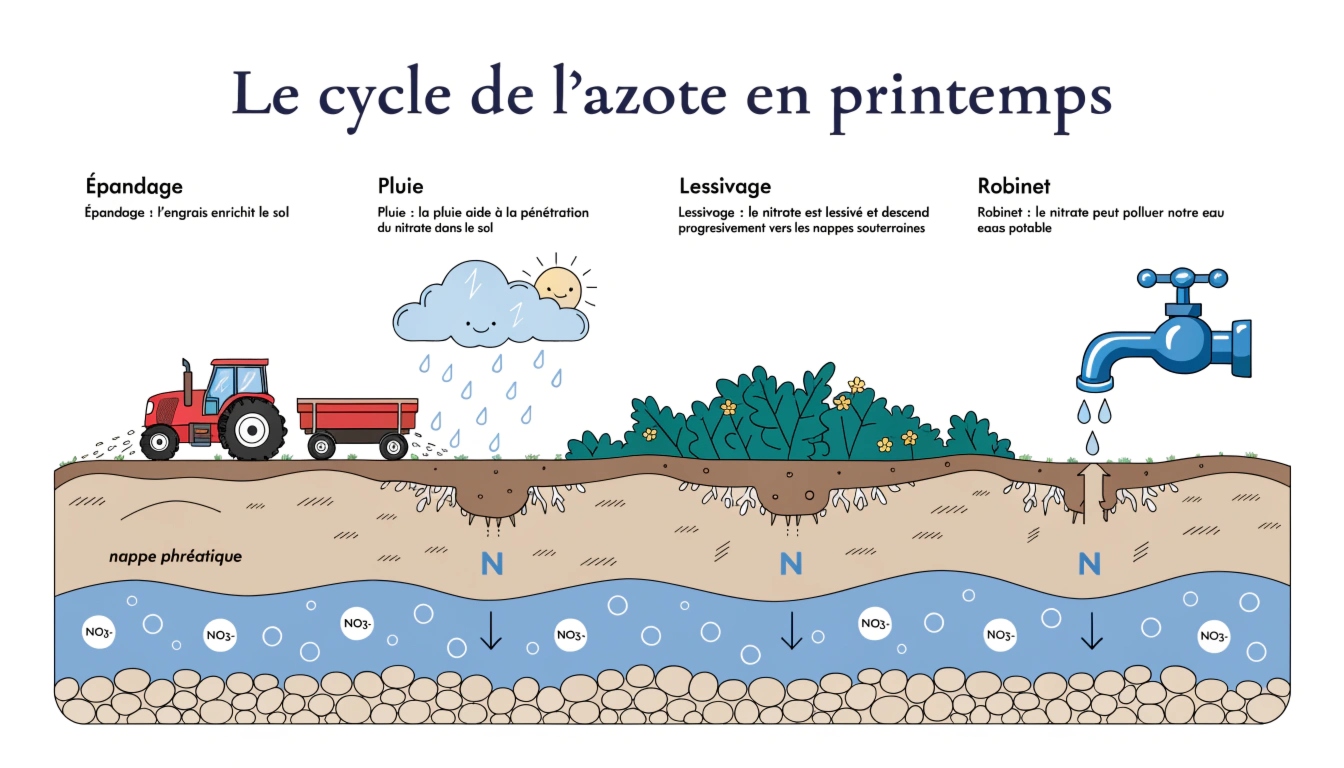
Nitrates are nitrogen ions naturally present in the environment, but their concentration in water is strongly influenced by agricultural activity. Nitrogen supplied by chemical fertilizers, manure slurry, and manure transform in the soil into nitrates – highly soluble in water – and then leach into groundwater during spring rains.
Spring concentrates several aggravating factors simultaneously: pre-crop applications carried out between January and May, abundant rainfall that accelerates infiltration, soil still cold that slows nitrogen absorption by plants, and sparse vegetation that has not yet absorbed nitrogen inputs. The result: a spring peak of nitrates in groundwater and surface water, well documented in French watercourses.
💡 Do we really know this? Seasonality of nitrates
In many French watercourses, strong seasonality of nitrate concentrations is observed: high concentrations in winter and spring (after applications), lower in summer (plant absorption). For groundwater, the time lag between application and arrival in the aquifer can reach several months to several years – hence the need for rigorous seasonal monitoring.
Sources of nitrates: agriculture in the lead
Nitrates in continental waters come from 66 % agriculture (nitrogen fertilizers and manure slurry), 22 % local authority discharges, and 12 % industry.
- Mineral nitrogen fertilizers – ammonium nitrate, urea: release nitrates immediately into the soil.
- Livestock effluents – pig and cattle manure: major source in Brittany, Flanders, Normandy.
- Defective septic tanks – localized contamination, private wells in rural areas.
- Poorly treated municipal wastewater – discharges in peri-urban and industrial areas.
- Natural decomposition – natural geochemical background (< 10 mg/L under normal conditions).
2. At-risk areas in France and Belgium
European Directive 91/676/CEE (Nitrates Directive) requires Member States to designate vulnerable zones – territories where groundwater or surface water exceeds or risks exceeding 50 mg/L of nitrates. In France, national and regional action programs (PAN/PAR) regulate applications in these areas. In Belgium, the Sustainable Nitrogen Management Program (PGDA) applies across the entire region.
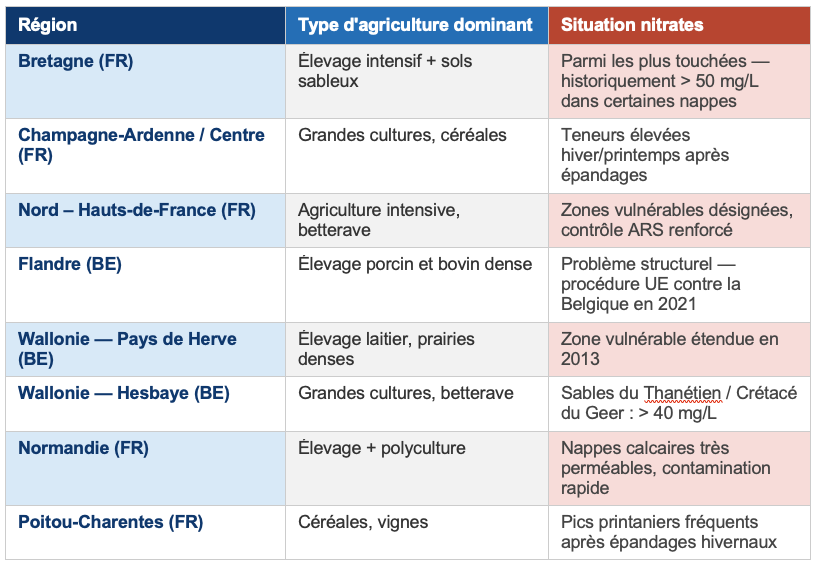
In Belgium, the situation is particularly concerning in Flanders, where the average nitrate concentration in groundwater was 25.6 mg/L in 2021, leading to legal proceedings by the European Commission due to non-compliance with Nitrates Directive objectives. In France, some regions have seen concentrations reach 100 mg/L in certain aquifers over the past 30 years.
3. Health risks: who is affected and at what threshold?
Methemoglobinemia: the danger for infants
The most documented risk is methemoglobinemia, also called "blue baby syndrome". In infants under 6 months, ingested nitrates are converted to nitrites by intestinal bacteria. These nitrites oxidize hemoglobin to methemoglobin, unable to carry oxygen. From 25 mg/L, infants can become oxygen-deficient.
🚨 Populations particularly vulnerable to nitrates
- Infants < 6 months: risk of methemoglobinemia from 10 mg/L. WHO recommends less than 10 mg/L for bottle preparation.
- Pregnant women: recommended exposure below 25 mg/L as a precaution.
- Immunocompromised persons: more sensitive to cumulative effects of nitrates and nitrites.
- Elderly with digestive pathologies: increased conversion to nitrites.
Long-term risks for adults
In adults, chronic exposure to high nitrate levels is associated with potential risks of colorectal and gastric cancers through the formation of nitrosamines in the digestive tract. Nitrates can also disrupt thyroid function. ANSES (French National Food Safety Agency) has conducted risk assessment work on nitrates specifically for the French population.

4. Regulation: what the law requires
In France
Nitrates Directive 91/676/CEE is transposed into French law by texts regulating applications in vulnerable zones. The 7th National Action Program (PAN) sets the rules: application schedules, maximum doses (170 kg N organic/ha/year), soil cover in winter.
For drinking water, the decree of December 20, 2001 (codified in the Public Health Code) sets the limit of 50 mg/L of nitrates in water intended for human consumption. In case of exceedance, water distributors must correct it: dilution, change of source, or physicochemical denitrification treatment.
In Belgium
In Wallonia, the Sustainable Nitrogen Management Program (PGDA) regulates applications across the entire territory (not just vulnerable zones). 6 vulnerable zones have been designated. The drinking water standard is identical to the EU: 50 mg/L. Between 2004–2007, 10 % of raw water intakes for Walloon public distribution exceeded this threshold.
In Flanders, VMM (Vlaamse Milieumaatschappij) monitors groundwater. Agricultural pressure is structurally very strong, with livestock densities among the highest in Europe.
⚠️ Private wells: a zone often ignored
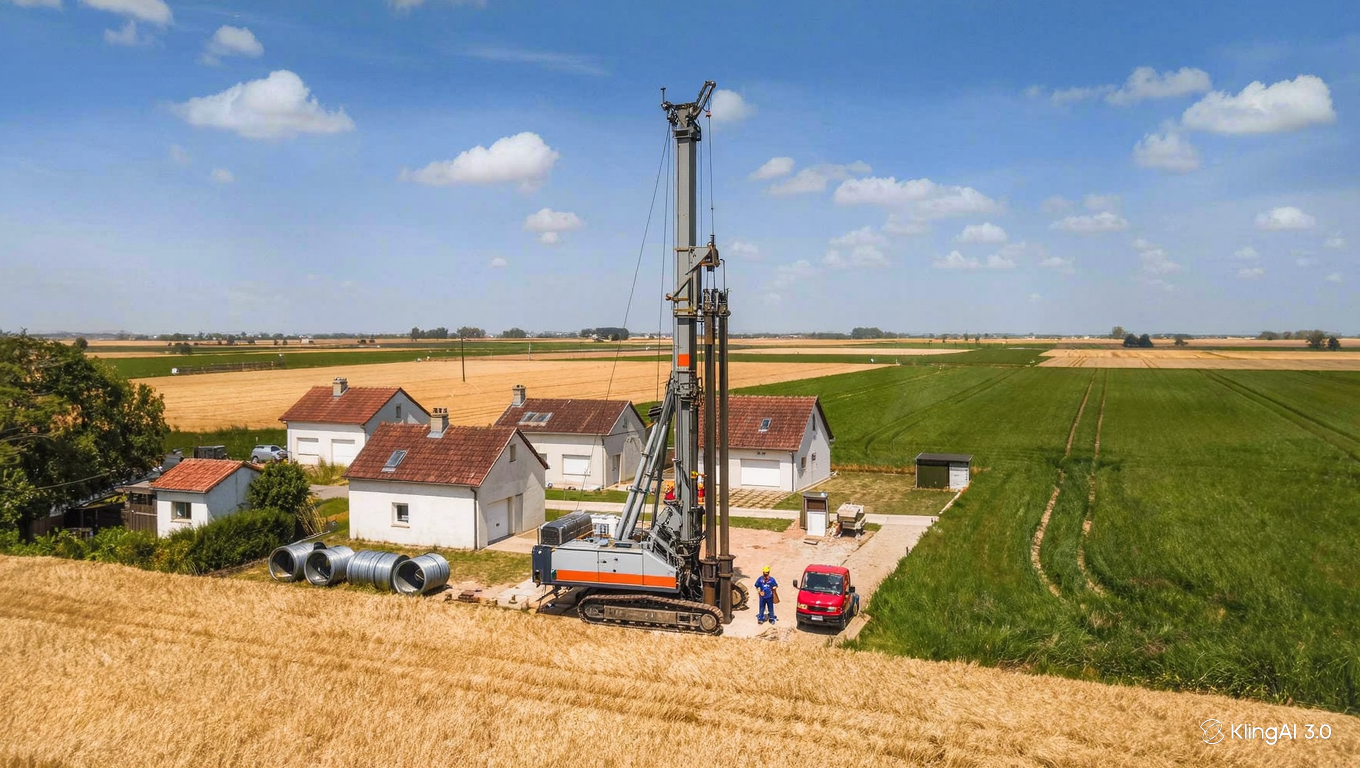
Private wells and boreholes are not subject to the same controls as public network water. Nitrate concentrations up to 10 times higher than the standard have been measured in some rural wells in Eastern Europe, but the phenomenon also exists in France and Belgium. Anyone supplied by a private well in an agricultural area must test their water annually – and install a treatment solution if nitrates exceed 50 mg/L.
5. What technologies eliminate nitrates? Technology comparison
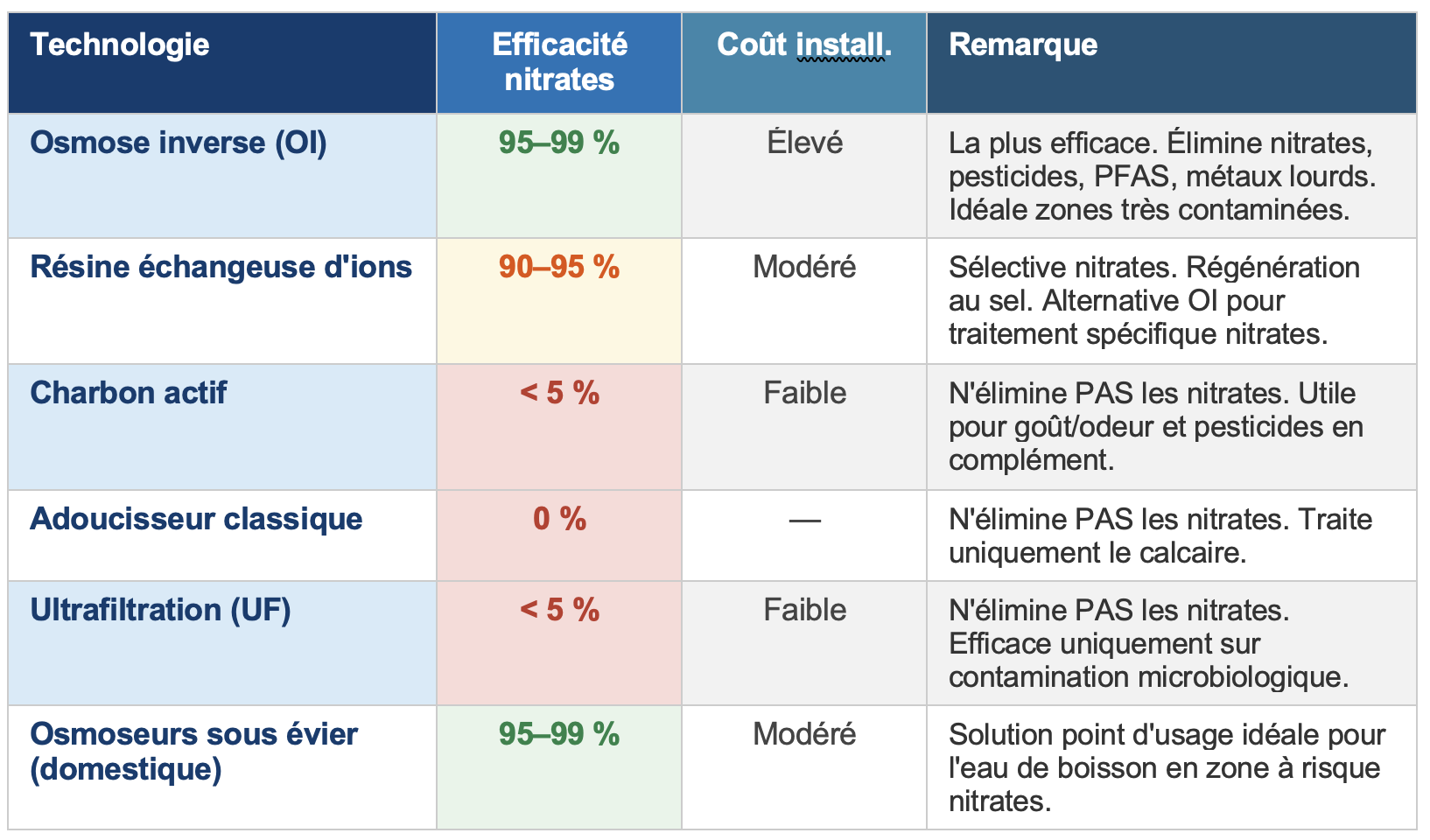
Unlike some other pollutants, nitrates are invisible, odorless, and tasteless: impossible to detect without analysis. And unlike limescale or chlorine, they cannot be eliminated by simple mechanical filtration or activated carbon. Only membrane technologies or ion exchange are effective.
💡 Why activated carbon and water softeners are NOT enough for nitrates
This is a common misconception: an activated carbon filter improves water taste, reduces chlorine and some pesticides – but does not eliminate nitrates at all. Same with water softeners, which only treat limescale (calcium and magnesium). For nitrates, only reverse osmosis or a specific ion-exchange resin is effective.
6. DIMM solutions for treating nitrates
Solution 1 – Reverse osmosis: the standard for highly contaminated areas
Reverse osmosis is the most effective and versatile technology for eliminating nitrates. With removal rates of 95 to 99 %, it guarantees compliant water even in the most contaminated areas. It simultaneously eliminates nitrates, pesticides, PFAS, heavy metals, pharmaceutical residues, and viruses.
🔗 DIMM Solutions – Reverse osmosis against nitrates
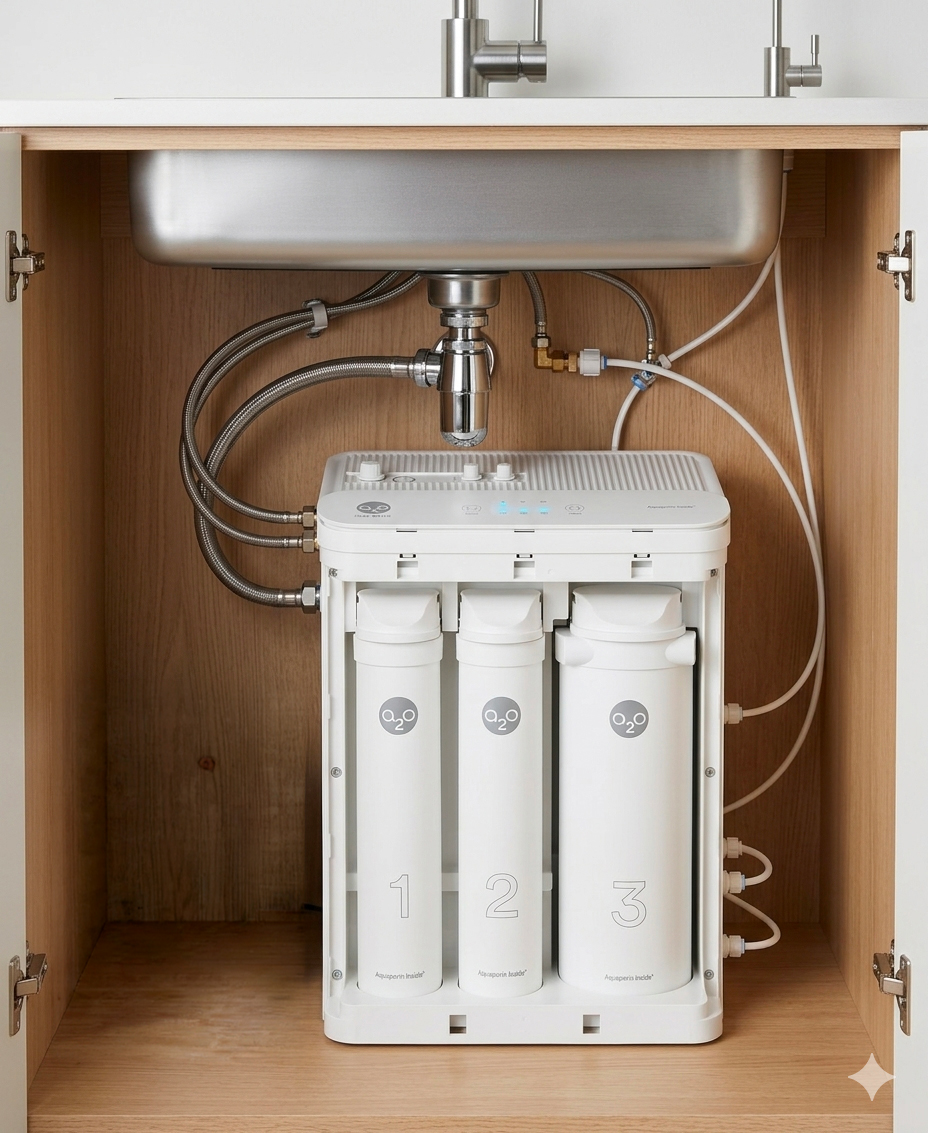
- A2O Pure – Aquaporin Inside® reverse osmosis unit – nitrate removal rate among the highest on the market, direct flow 2.1 L/min, IoT-connected, 65 % recovery. Ideal for households and professionals in nitrate zones.
- DIMM under-sink reverse osmosis units – complete range for point-of-use (kitchen, fountains, coffee machines).
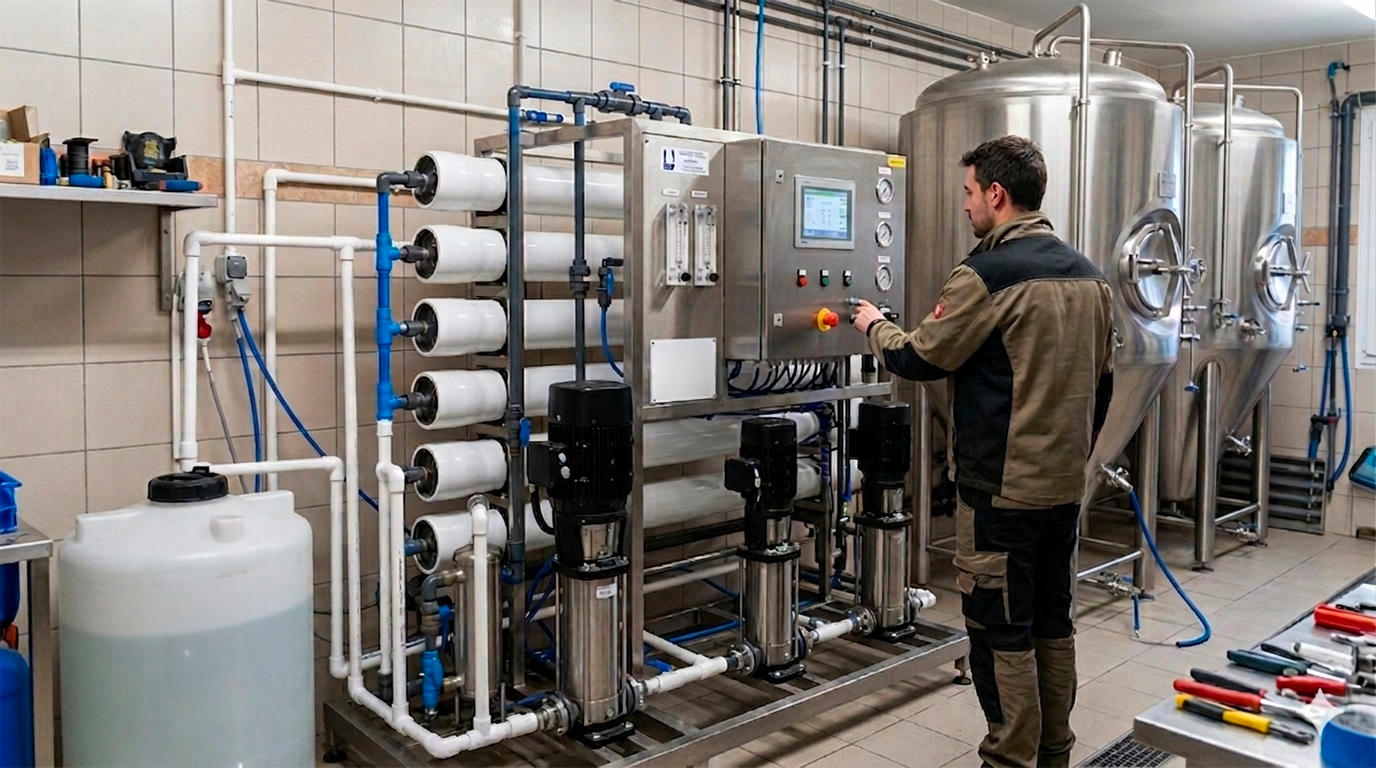
- Industrial reverse osmosis units – continuous ultra-pure water production for breweries, catering, agribusiness, and communities.
Solution 2 – Water testing: start by diagnosing
Before any solution recommendation, the first step is water analysis. Since nitrates are invisible and odorless, only testing can quantify the risk. DIMM water tests allow rapid, reliable diagnosis on-site, without waiting for a laboratory for screening measurements.
🔗 DIMM Solutions – Water testing and diagnosis
- DIMM water tests – test strips, reagents, and analysis kits for quick measurement of nitrates, pH, hardness, chlorine, and other parameters. Essential for field diagnosis before treatment recommendation. Available for consumers and professionals.
Solution 3 – DIMM membranes: for industrial installations
For professional high-flow installations – agribusiness, breweries, spas, agricultural greenhouses – DIMM high-performance membranes enable continuous, reliable water treatment in nitrate zones.
🔗 DIMM Solutions – Membranes and advanced filtration
- DIMM membranes for reverse osmosis – high-performance filtration elements retaining nitrates, salts, metals, and bacteria. Compatible with professional reverse osmosis systems.
- DIMM membrane holders – technical components for integration into industrial treatment chains.
7. Recommended treatment chain according to installation profile
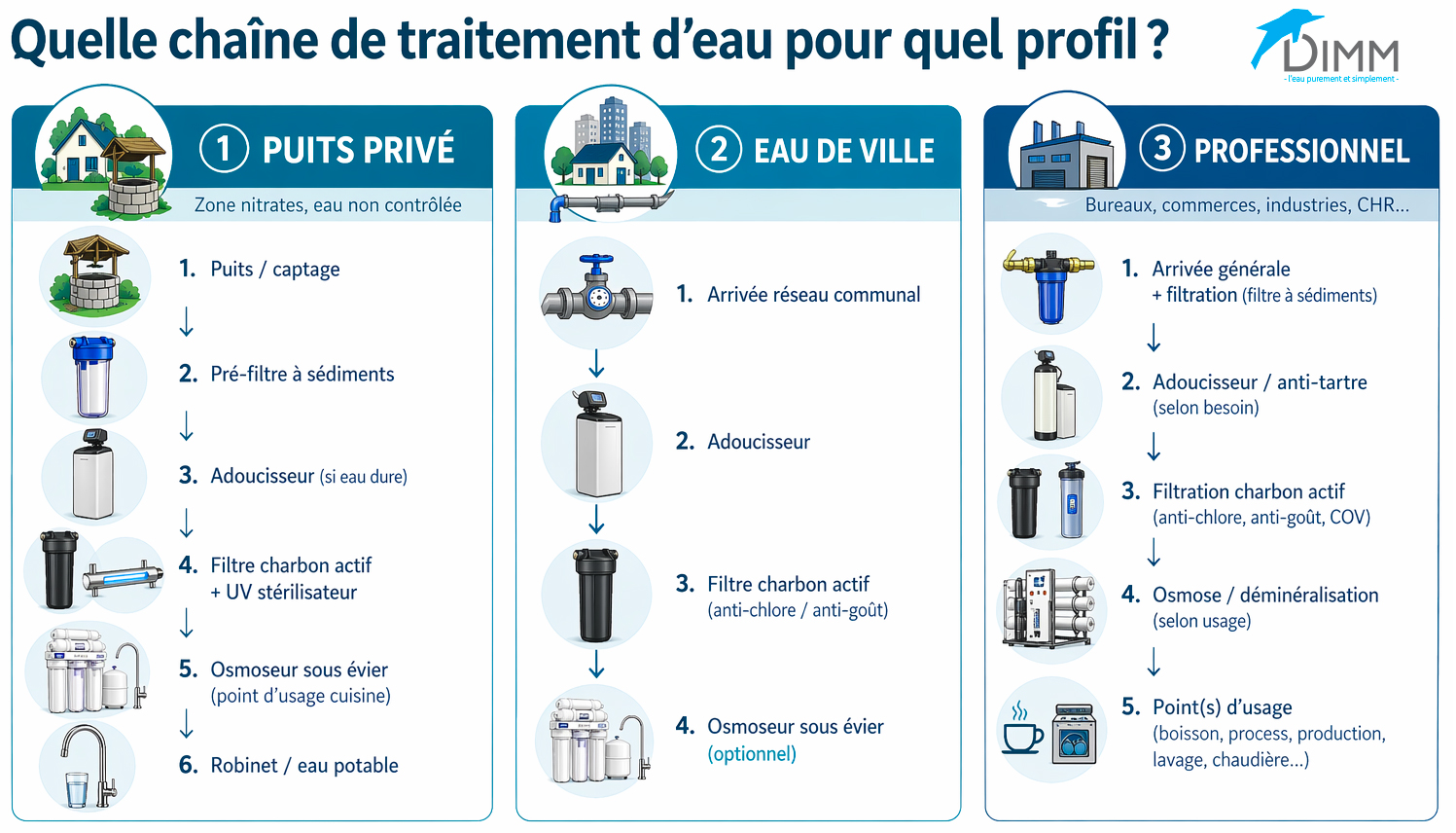
🏠 Profile A – Household with private well in agricultural area
- Water analysis → DIMM nitrate test (priority diagnosis – annual recommended)
- Pre-filtration → DIMM sand filter + automatic filter holder (sediment, turbidity)
- Nitrate treatment → DIMM under-sink reverse osmosis (drinking water) or ion-exchange resin for complete treatment
- Disinfection → DIMM UV sterilizer (microbiological safety)
- Follow-up → Annual test + pre-filter maintenance
🏙️ Profile B – Mains water in vulnerable zone (spring peak risk)
- Seasonal monitoring → DIMM nitrate test in April-May (spring peak)
- Drinking water protection → A2O Pure (Aquaporin Inside®) or DIMM under-sink reverse osmosis – drinking water guaranteed < 10 mg/L
- Comfort & equipment → DIMM water softener as supplement (limescale) if hardness > 20 °fH
- Safety filtration → POU activated carbon for taste and residual chlorine
🏭 Profile C – Professional (daycare, food service, maternity, brewery)
- Initial and annual analysis → Accredited laboratory + DIMM field tests for intermediate monitoring
- Pre-treatment → Sand + activated carbon + automatic filter holders
- Professional reverse osmosis → MO6500 / MO10000 Ecosoft DIMM, flows adapted to process
- Remineralization and stabilization → according to use (beverage, process, steam)
- Final disinfection → UV or ozonation for microbiological safety
- Traceability → Connected sensors and reporting for compliance proof
8. Spring: the ideal period to audit and equip your customers
Spring is the most strategic season for installers and distributors specializing in water treatment. It's the time when:
- Nitrate peaks are highest in groundwater – the argument is real and measurable.
- Customers are receptive to awareness messages – rainfall, applications, and environmental news create an attention window.
- New rural construction begins – it's the time to integrate water treatment from installation.
- Private wells restart after winter – diagnosis and equipment are essential before intensive use.
DIMM makes available to its resellers and installers complete technical expertise and products in stock immediately.

Conclusion: spring is now
Nitrates in water are not an abstract threat. It's a risk documented, measurable, and treatable – provided you act at the right time. Spring, with its agricultural applications and abundant rainfall, is the period when vigilance must be maximum, particularly in vulnerable zones in France and Belgium.
The good news: solutions exist and are compact, effective, and accessible. Reverse osmosis, whether at point-of-use or in professional installation, is the most complete answer. A simple water test is enough to identify the risk and trigger action.