

Whether you are irrigating greenhouse crops or watering a herd, water quality has direct, measurable consequences: yield, health, equipment lifespan, costs. Yet many farms draw from a borehole or a well, with variable water that is rarely fit for use as-is.
The stakes differ between the greenhouse (precision irrigation, clogging, disinfection) and livestock (drinking water, biofilm, animal health), but the logic is the same: analyse, then treat precisely. And because agricultural water is regulated, we also compare the French and Belgian frameworks.
1. Why water quality is crucial in farming
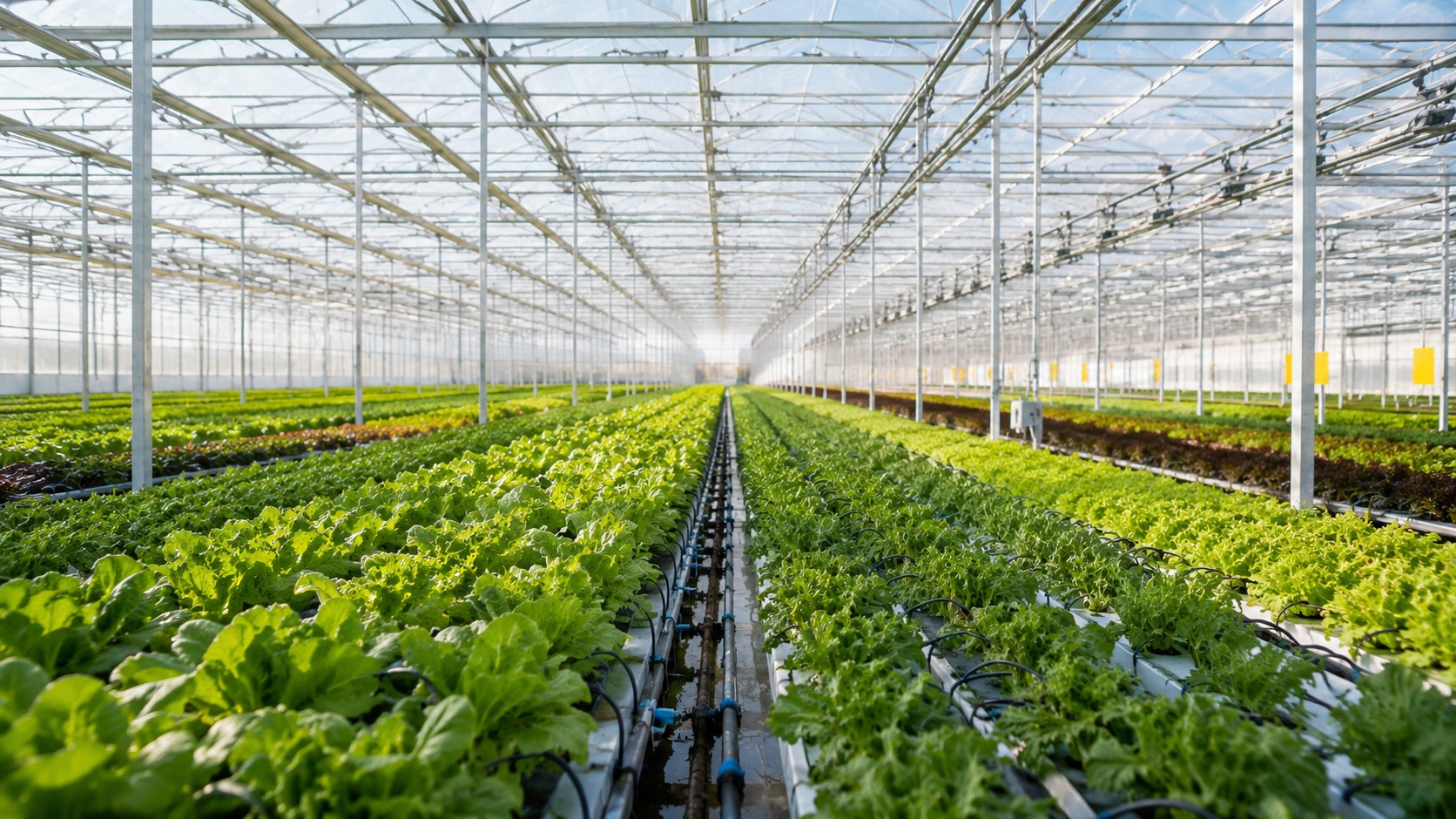
In a greenhouse, water carries the nutrients (fertigation) and flows through emitters with tiny passages: the slightest impurity is costly. In livestock farming, drinking water is the animal's first "feed": poor-quality water reduces intake, harms health and worsens the feed conversion ratio.
In both cases, poorly managed water fouls the networks, encourages biofilms and damages equipment. Water treatment is therefore a productivity lever, not a side expense.
2. In the greenhouse: precision irrigation
For irrigation and fertigation, three parameters are decisive: pH (often targeted between 5.5 and 6.5 for nutrient uptake), conductivity (EC) which reflects salinity, and alkalinity (bicarbonates) which drives pH up and causes scaling.
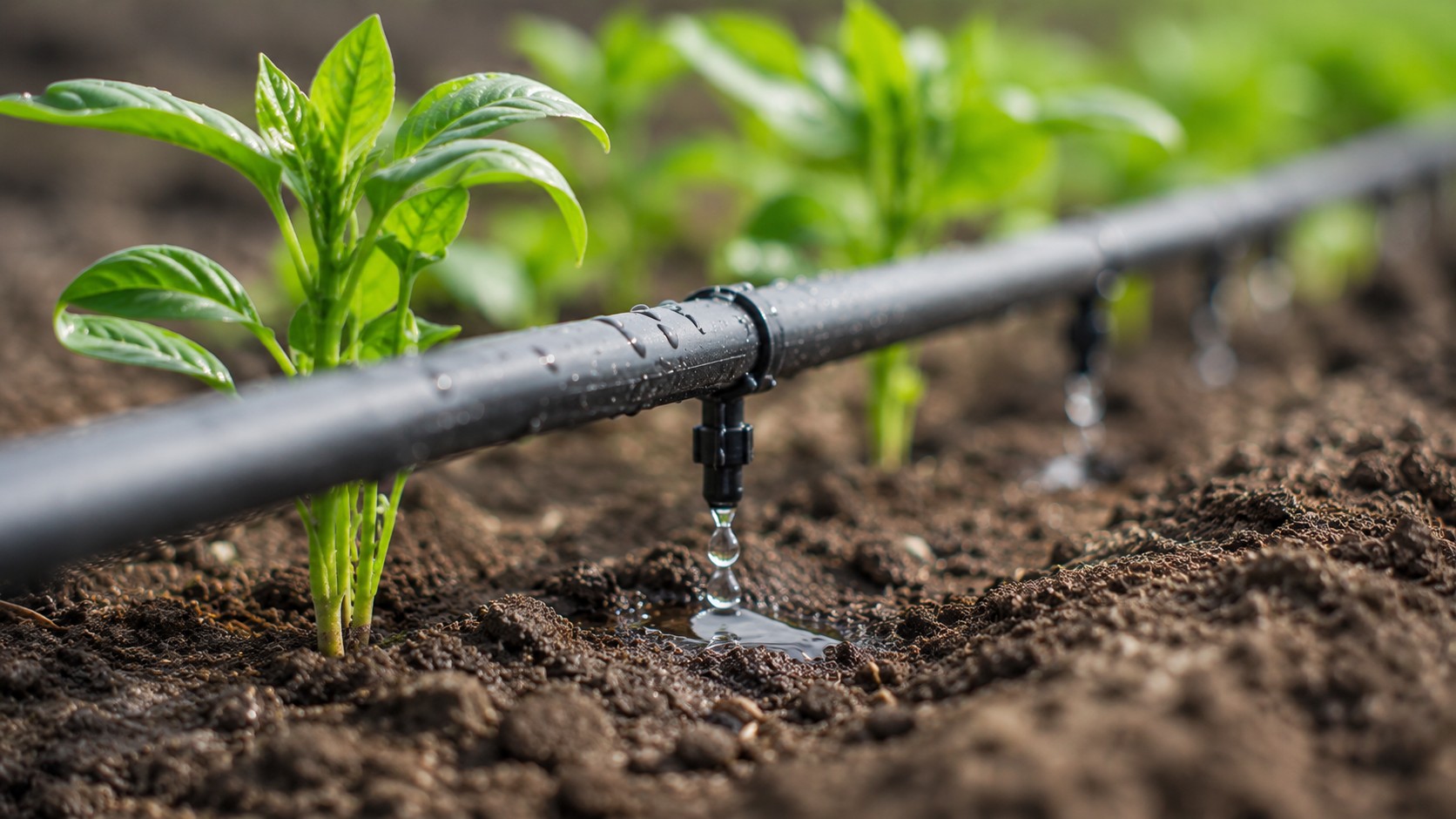
The great enemy of drip irrigation is clogging, in three forms:
- Chemical: limescale precipitation — hence acidification of the water to lower pH below 7.
- Physical: sand, silt, particles — hence filtration (screens, discs, sand).
- Biological: algae, bacteria, iron bacteria — hence disinfection. Note: above 0.5 mg/L of iron, water forms a brownish gel that blocks emitters and must be treated (iron removal).
Finally, greenhouses that recycle their drainage water must disinfect it (UV, slow filtration, thermal treatment) to avoid spreading pathogens throughout the crop.
3. In livestock: drinking water
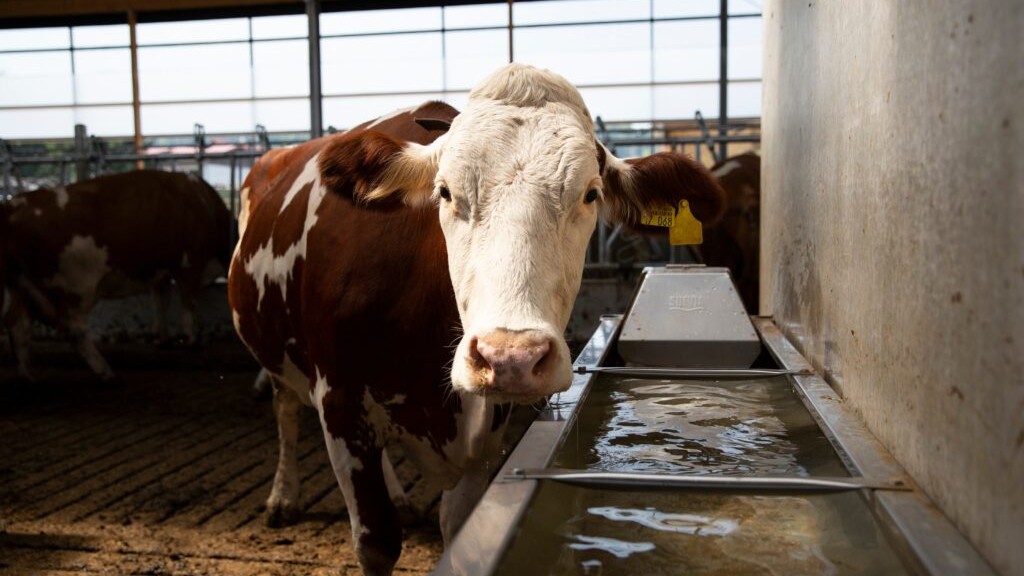
Drinking water must be of a quality close to potable water. The sensitive points:
- Bacteria & biofilm: pipes, drinkers and nipple lines are biofilm nests, especially in heated buildings. Disinfecting and cleaning the lines is essential.
- Iron & manganese: off-putting taste (lower intake), deposits that clog nipples and feed biofilm.
- Nitrates: common in borehole water in farming areas, to be monitored.
- Hardness / pH: limescale scales the circuits; acidifying drinking water is a common practice (poultry, pigs) for sanitary quality.
4. Treatment solutions
- Filtration (screens, discs, sand): essential at the head of the network, in greenhouses and livestock alike.
- Iron / manganese removal: against clogging of emitters and nipples, and staining.
- Acidification & pH management: to limit scaling and optimise fertigation (greenhouse) or drinking-water quality (livestock).
- Disinfection: UV for recycled greenhouse water; line disinfection/cleaning in livestock.
- Reverse osmosis / demineralisation or rainwater: to obtain low-EC water for precision fertigation.
5. France / Belgium comparison
Both countries share a common EU basis — the Nitrates Directive (1991) and Regulation (EU) 2020/741 on the reuse of treated wastewater — but the implementation differs, notably because water is a regional competence in Belgium.
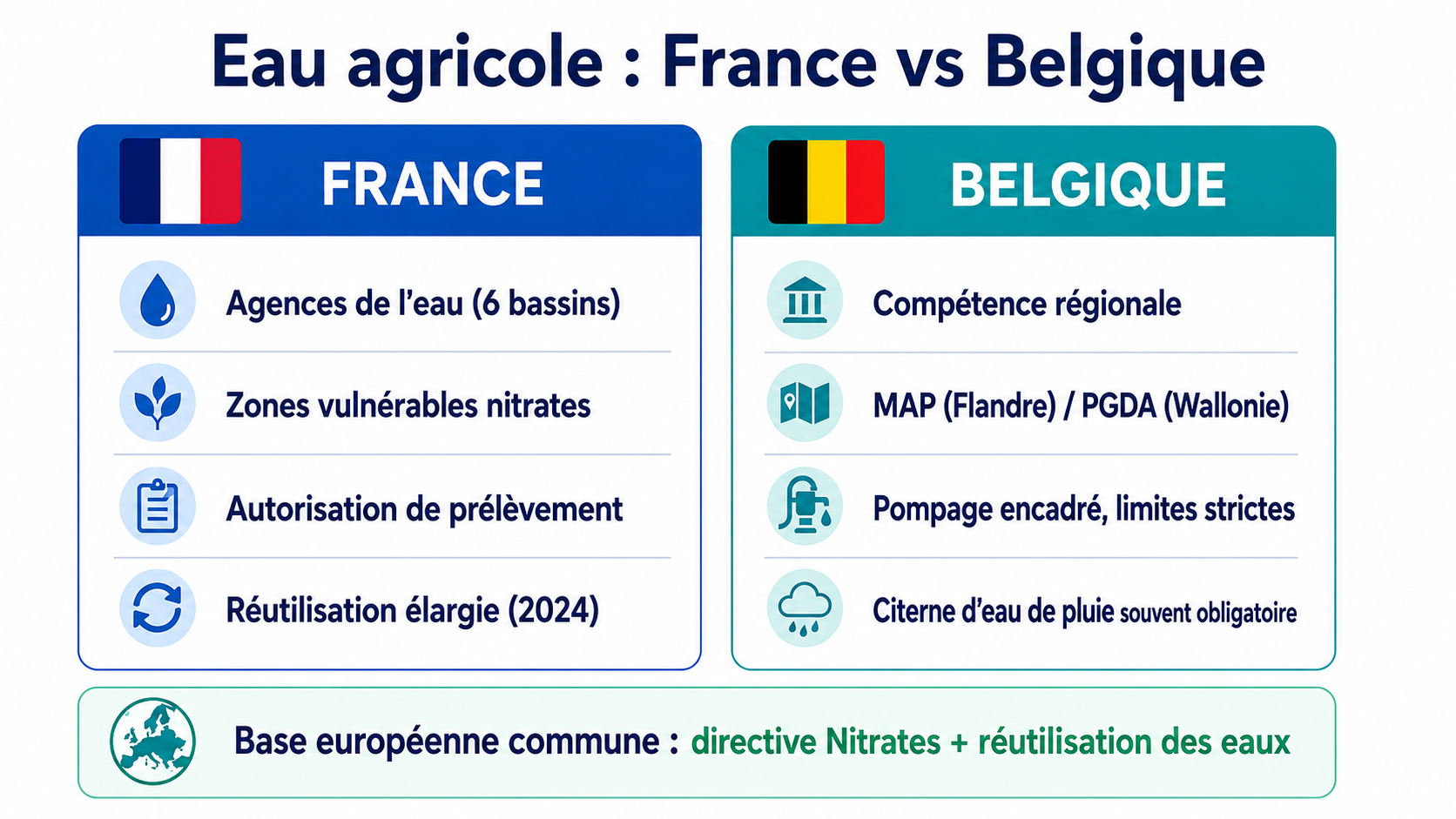
| France | Belgium | |
|---|---|---|
| Governance | National + water agencies (6 basins) | Regional (Flanders, Wallonia, Brussels) |
| Nitrates (EU dir.) | Vulnerable zones + action programmes | MAP (Flanders), PGDA (Wallonia) |
| Abstraction | Declaration/authorisation (water law, IOTA) | Regional framework, strict limits (Flanders) |
| Aid / levies | Water agencies (aid & levies) | Regional schemes |
| Reuse (REUT) | Broadened framework (2024 decree) on EU basis | Encouraged, still little deployed |
| Rainwater | Regulated, encouraged | Tank often mandatory in new builds |
⚠️ Evolving regulation — verify
These reference points are current as of June 2026 and given for guidance. Agricultural rules (nitrates, abstraction, reuse) change regularly and vary by basin (FR) and Region (BE). Before any project, check with your water agency / DDT (France) or your regional administration (Belgium).
6. Reuse and water saving: a shared trend
Faced with summer water stress, France and Belgium both push towards frugality and reuse: recycling greenhouse drainage water, harvesting rainwater, and reusing treated wastewater (REUT) for irrigation, on the basis of the European regulation. These approaches cut abstraction — and therefore dependence and cost — provided there is suitable treatment (filtration, disinfection) ensuring safety.
🔗 DIMM solutions — Greenhouses & livestock
- Filtration & iron removal against clogging of emitters and nipples.
- UV disinfection for recycled greenhouse water and drinking-water safety.
- pH management, reverse osmosis & analyses for water suited to each use.
7. Who is this treatment for?
Market gardeners & horticulturists
Greenhouses, nurseries, soilless crops: filtration, pH/EC balance and disinfection of recycled water protect both the crops and the installations.
Livestock farmers (cattle, pigs, poultry)
Borehole-fed buildings: iron removal, line disinfection and pH control secure the drinking water — an investment quickly repaid by herd health and performance.
Conclusion: analyse, treat, secure
In greenhouses and livestock farming alike, raw borehole water is rarely ready to use. An analysis followed by suitable treatment — filtration, iron removal, pH management, disinfection — protects crops, animals and equipment while controlling costs. And because agricultural water is regulated and under pressure, it is best to know your framework (FR or BE) and anticipate reuse, which is taking hold on both sides of the border.
The DIMM teams support partner installers, distributors and resellers in choosing water-treatment solutions for greenhouses and livestock, in France and Belgium.
Reference points (current June 2026, subject to change)
- Greenhouse: target a suitable pH (often 5.5-6.5) and controlled EC; acidify against bicarbonates.
- Emitter clogging: chemical (limescale), physical (particles), biological (algae/iron bacteria); iron > 0.5 mg/L to treat.
- Livestock: drinking water close to potable; watch biofilm, iron/manganese, nitrates, hardness; frequent acidification.
- Common EU basis: Nitrates Directive (1991) and Regulation (EU) 2020/741 (reuse of treated wastewater).
- France: water agencies, nitrate vulnerable zones, abstraction authorisations, broadened REUT (2024 decree). Belgium: regional competence (MAP in Flanders, PGDA in Wallonia), rainwater tank often mandatory in new builds.
- General information — check the rules in force with the competent authorities (water agency/DDT in FR; Region in BE).