


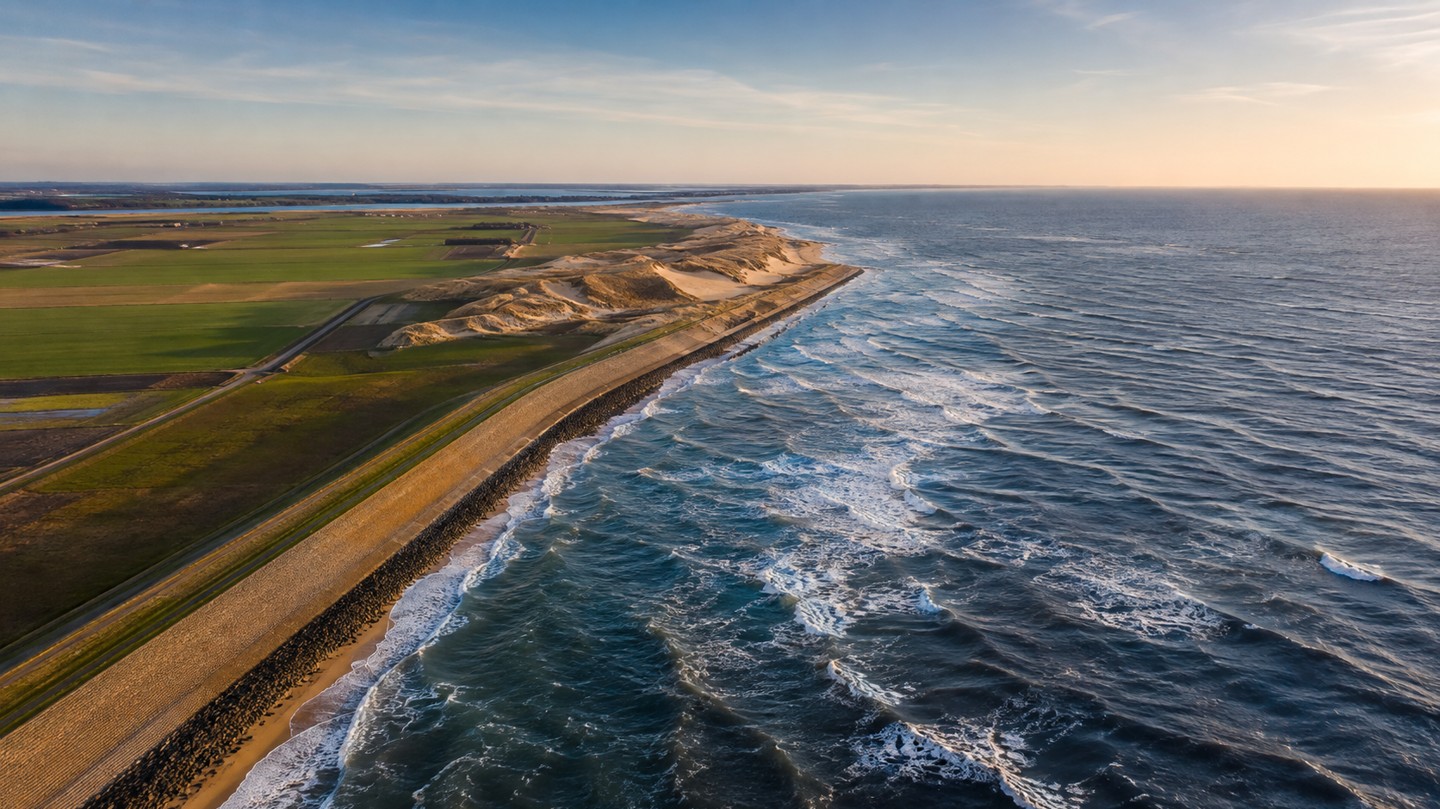
The coast combines the challenges for water treatment: proximity to the sea, fragile coastal aquifers, strong seasonality of demand. The result: water whose salinity and composition can vary widely, with very specific constraints.
1. The coast, a particular context
Near the coast, coastal aquifers are in a fragile balance with the sea. Summer demand (tourism) increases abstraction, at the very time the resource is most stretched. Water quality there is therefore variable and monitored.
2. Saline intrusion
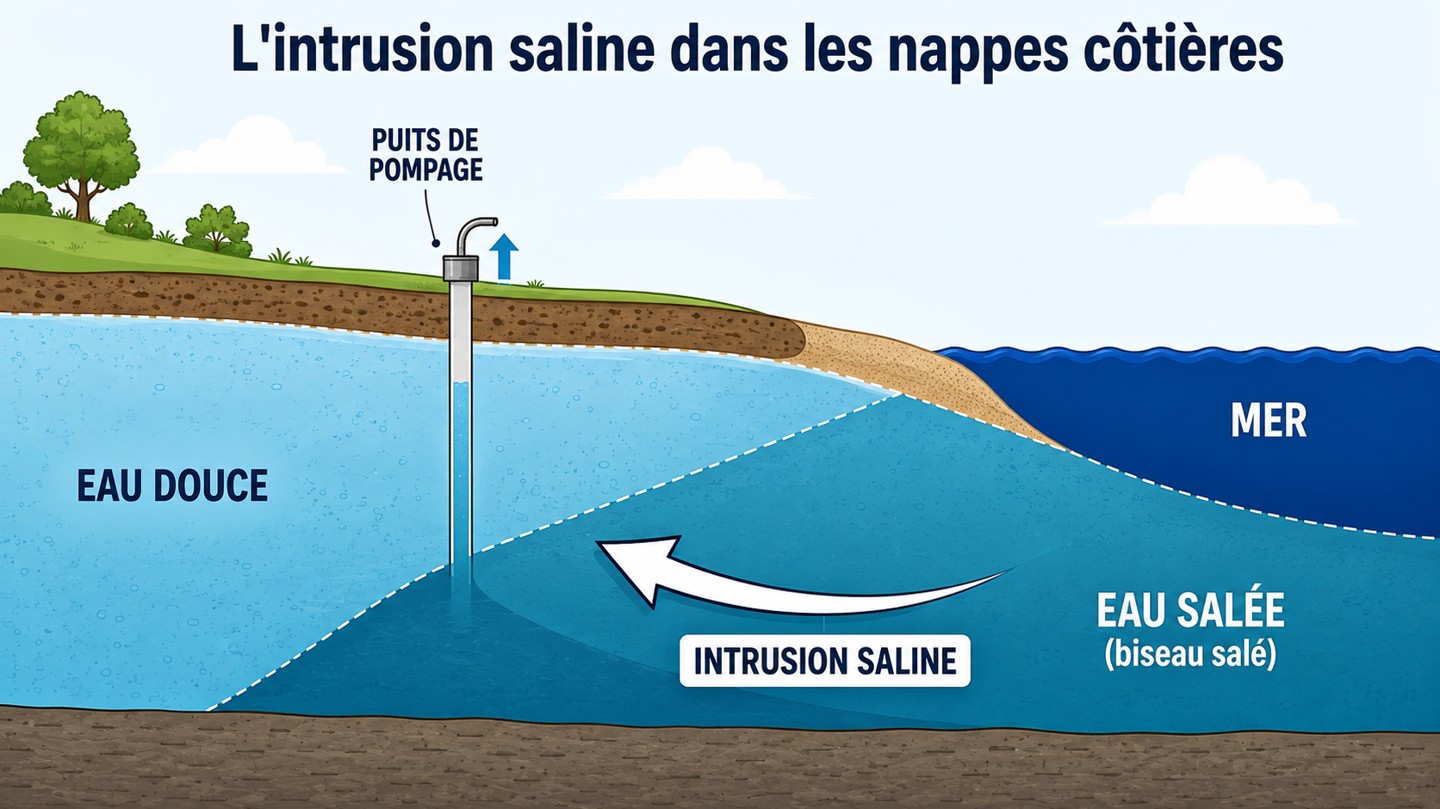
When a coastal aquifer is over-exploited, seawater rises into the aquifer: this is saline intrusion (salt wedge). It shows up as a rise in chlorides and conductivity, sometimes abrupt during high demand. The phenomenon is nearly irreversible and worsens with sea-level rise.
3. Concrete cases: France, Belgium, the Netherlands
The phenomenon is anything but theoretical:
- France: over about 5,500 km of mainland coastline, the BRGM has inventoried 95 shallow aquifers and 17 deep aquifers exposed; several Breton aquifers and Atlantic/Mediterranean seaboards are classed as sensitive to saline intrusion.
- Netherlands: a quarter of the territory is below sea level. Salinisation (verzilting) strongly affects Zeeland, Friesland, Groningen and the IJsselmeer polders; it has led to the abandonment of drinking-water abstractions and penalises agriculture (nurseries, greenhouse horticulture, arboriculture), sensitive even to low salt levels.
- Belgium / Flemish coast: as in the Netherlands and northern France, dry summers drive over-exploitation of coastal aquifers, increasing the salinisation of the polders.
📊 A few key figures
The quality reference for chlorides in drinking water is 250 mg/L (order of 11 January 2007; indicator parameter of Directive (EU) 2020/2184). For comparison, seawater contains about 19,000 mg/L of chlorides: a small fraction of seawater mixed with fresh water is enough to exceed the threshold.
4. The consequences for treatment
Salinised water requires several adaptations:
- Variable salinity: the treatment must absorb the fluctuations.
- Increased corrosivity (chlorides): choice of resistant materials.
- Taste and protection of downstream equipment.
5. The case of bromides
Coastal waters are often rich in bromides. During disinfection (ozone, chlorine), bromides favour the formation of bromates · a regulated by-product (10 µg/L). Hence particular vigilance over the choice and operation of disinfection.
6. The solutions
Faced with these constraints:
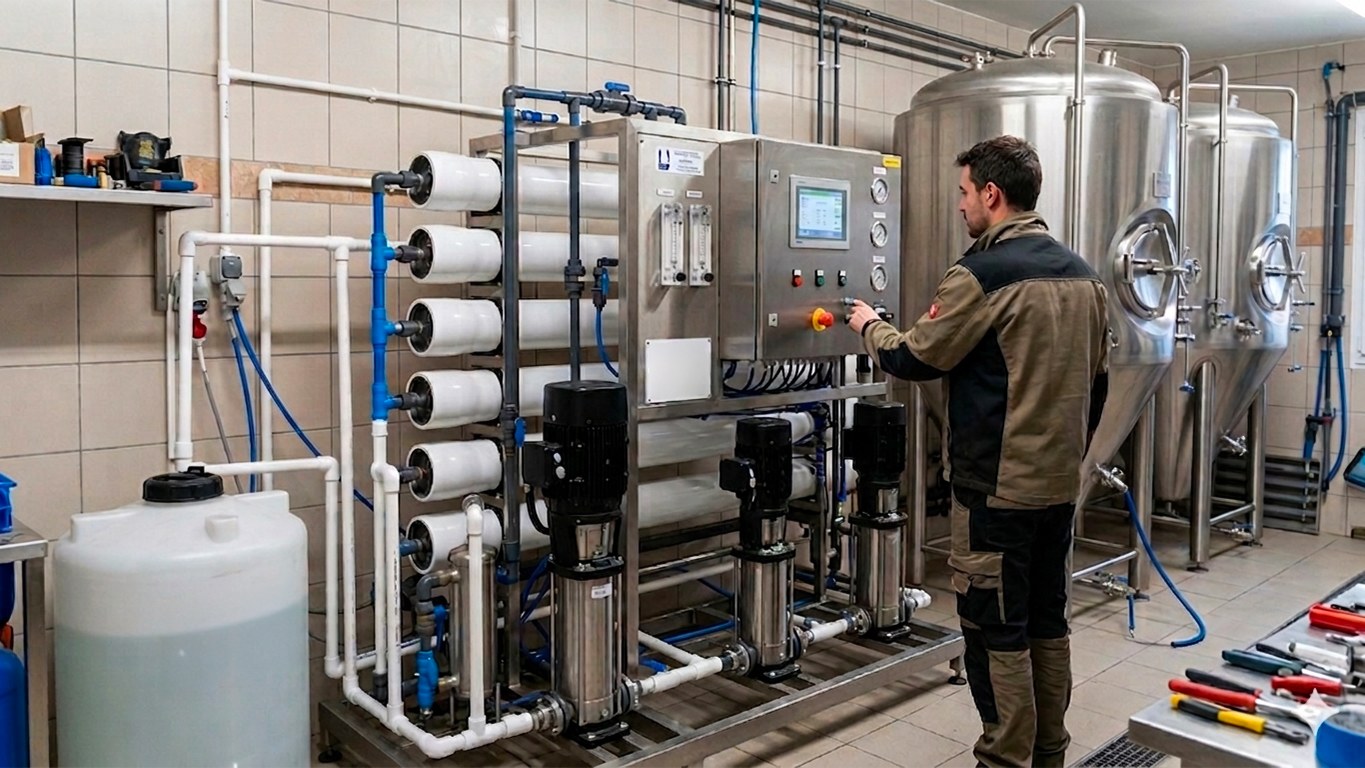
- Reverse osmosis to desalinate (partially or fully) and retain chlorides.
- Robust pretreatment (filtration, anti-scale) to protect the membranes.
- Suitable disinfection to limit bromates, and anti-corrosion materials.
7. Monitoring & anticipation
Control comes through monitoring of conductivity and chlorides, abstraction management not to worsen the intrusion, and sizing designed for seasonal variability.
8. Who is this approach for?
Communities and operators on the coast, coastal campsites and hotels, industries located near the coast, and operations on salinised aquifers.
Conclusion
Treating coastal water means dealing with a shifting resource: variable salinity, saline intrusion, bromides and corrosivity. The answer combines reverse osmosis, robust pretreatment, controlled disinfection and monitoring · all sized to absorb the variations.
The DIMM teams support partner installers, distributors and resellers in Belgium, France and the Netherlands in choosing and sizing water-treatment solutions.
🔗 DIMM solutions
Reverse osmosis, pretreatment and advice on disinfection: DIMM secures the treatment of salinised coastal waters.
Reference points
- Saline intrusion: rise of the salt wedge in over-exploited coastal aquifers; nearly irreversible, worsened by sea-level rise.
- France: ~5,500 km of coastline; 95 shallow and 17 deep aquifers inventoried (BRGM), Breton aquifers notably sensitive.
- Chlorides: quality reference 250 mg/L (order of 11 January 2007; indicator parameter of Directive (EU) 2020/2184). Seawater ≈ 19,000 mg/L of chlorides.
- Netherlands: ¼ of the territory below sea level; salinisation (verzilting) in Zeeland, Friesland, Groningen and polders · abandoned abstractions, penalised agriculture. Flemish coast and northern France also affected.
- Coastal bromides → increased risk of bromates during disinfection (limit 10 µg/L, Directive 2020/2184).
- Constraints: variable salinity, corrosivity (chlorides), protection of equipment.
- Solutions: reverse osmosis, robust pretreatment, suitable disinfection, anti-corrosion materials.
- General information dated August 2026; sizing according to the water analysis and local variability.