


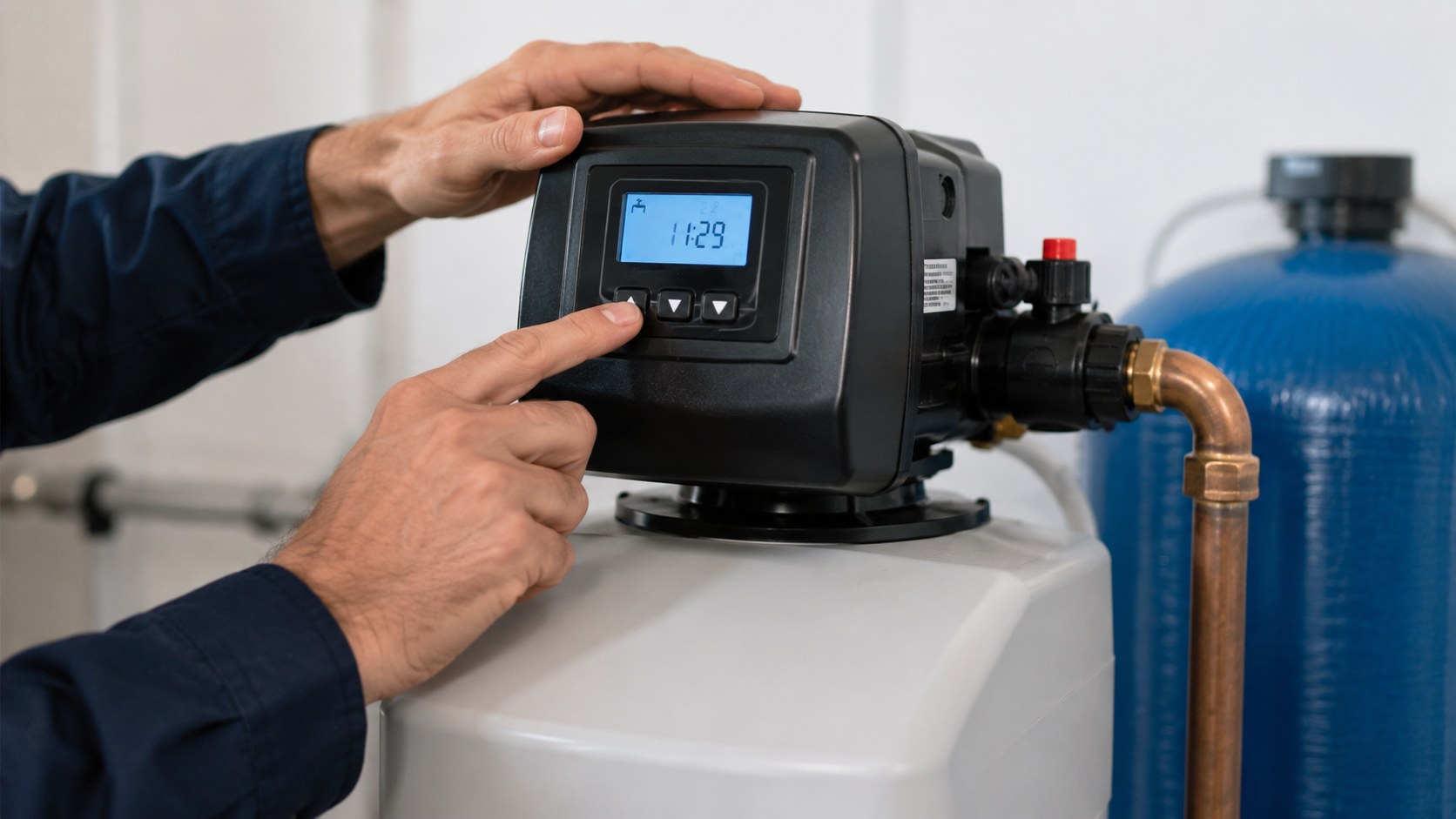
In a water softener, the resin captures calcium and magnesium then becomes saturated: it must be regenerated with brine. The whole question is when to trigger this regeneration. That is precisely what distinguishes the two main families of control valves: timed and volumetric.
The choice is not trivial: it directly affects the salt and water consumption, the comfort of use and the suitability of the unit to the real consumption of the household or establishment. Here is how to separate them · and what to recommend depending on the customer's profile.
1. Timed: regeneration at a fixed interval
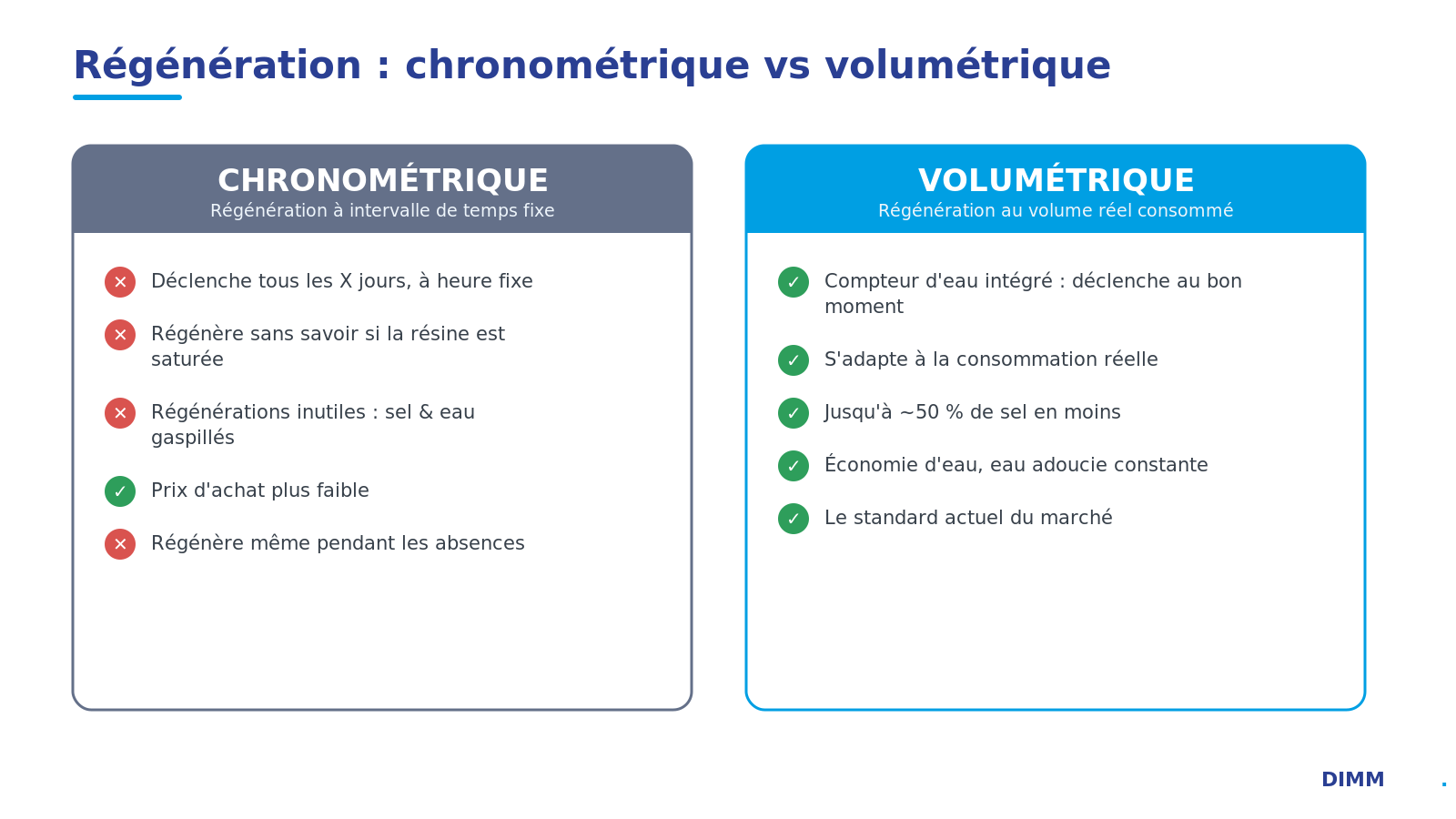
The timed (or "clock") valve triggers regeneration at predefined time intervals · for example every X days, at a fixed time · regardless of the amount of water actually consumed.
Its advantage: a lower purchase price and great simplicity. Its major drawback: it regenerates "blindly", without knowing whether the resin is really saturated. As a result, unnecessary regenerations during absences or off-peak periods · hence wasted salt and water · or, conversely, water that hardens again in the event of unforeseen over-consumption.
2. Volumetric: regeneration by real volume
The volumetric valve integrates a water meter: it triggers regeneration only when a given volume has been treated, i.e. when the resin really approaches saturation. It adapts to consumption: more regenerations in high-demand periods, none during an absence.
Direct consequence: fewer unnecessary regenerations, hence a significant salt and water saving · commonly around 50% less salt compared with a poorly set timed valve · and constant softened water. It is today the standard on the market.
3. Comparison: what really separates them
| Criterion | Timed | Volumetric |
|---|---|---|
| Triggering | Fixed time interval | Volume of water actually consumed |
| Adaptation to consumption | No | Yes |
| Salt consumption | Higher (unnecessary regenerations) | Optimised (up to ~50% less) |
| Water consumption | Higher | Reduced |
| Handling absences | Regenerates anyway | Does not regenerate unnecessarily |
| Purchase price | Lower | Slightly higher |
| Constant softened water | Variable depending on setting | Yes |
💰 The real cost over time
The extra purchase cost of a volumetric valve is recovered through salt and water savings, especially on variable or irregular consumption. In use, it is generally the most cost-effective choice · a simple argument to present to the customer.
4. Which model for which customer?
Volumetric suits almost all installations: households with varying consumption (holidays, remote work, guests), families, and above all professional uses with irregular demand. It is the default choice to recommend.
Timed retains an interest for uses with very stable and predictable consumption, or when the initial purchase budget prevails, bearing in mind the running-cost premium. In most professional cases, volumetric remains preferable.
5. Beyond the debate: correct setting and sizing
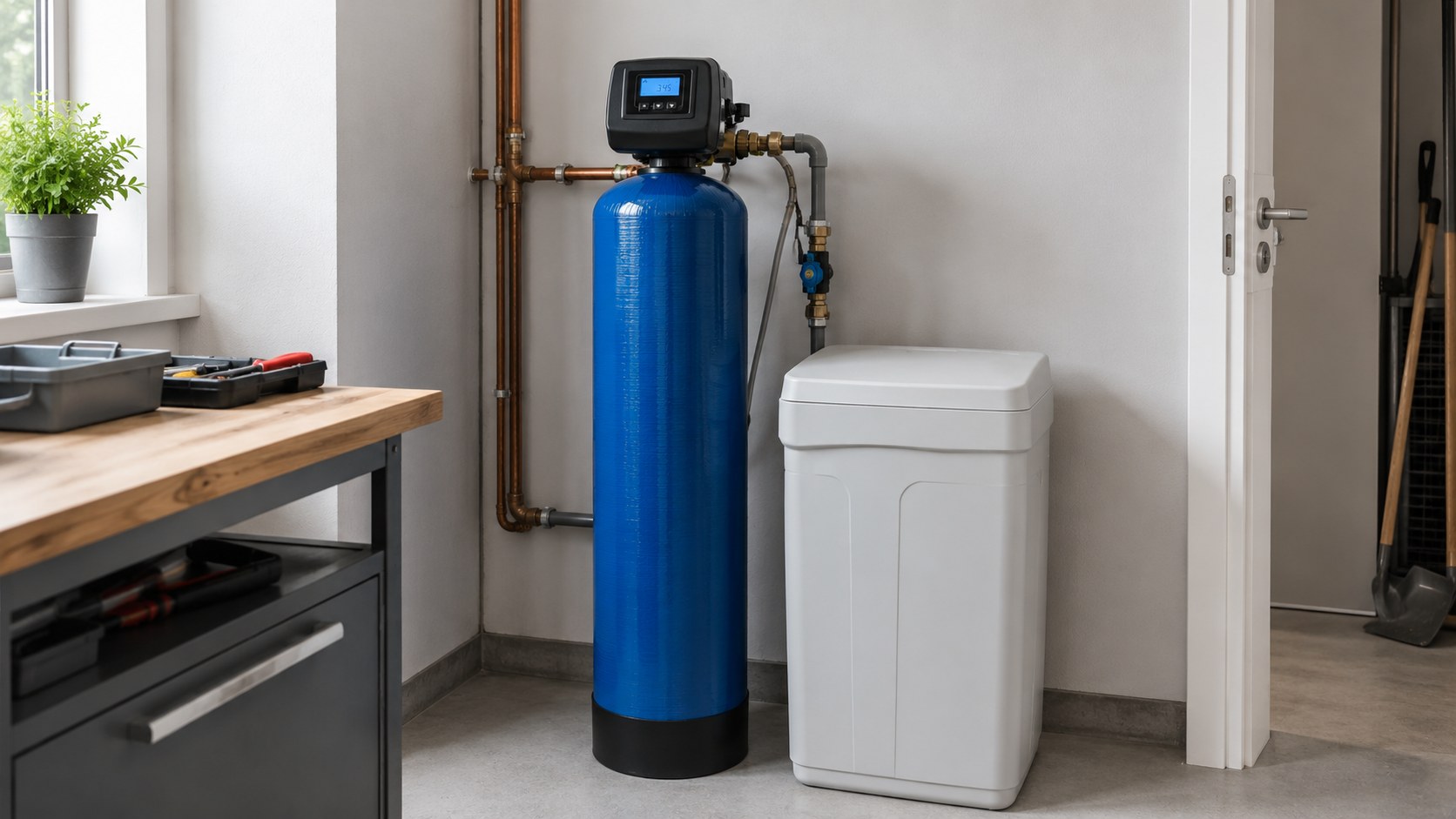
Volumetric or timed, a poorly sized or poorly set softener will consume too much salt and water. A few fundamentals not to neglect:
- Size according to water hardness, the number of occupants and peak flow.
- Set the residual hardness (blending/by-pass) to a target of about 5 to 10 °f.
- Choose quality salt and maintain the tank to avoid salt bridges and deposits.
- Regularly check the regeneration and the outlet hardness.
🔗 DIMM solutions · Softeners & valves
- DIMM softener range · volumetric models for residential, tertiary and industry.
- Clack control valves (CE, CI, WS1) · volumetric regeneration, spare parts and settings.
- Regenerating salt & maintenance · to optimise consumption and the installation's longevity.
Conclusion: volumetric, save exceptions
The debate is settled quite simply: timed regenerates by time, volumetric by real volume. The latter avoids unnecessary regenerations, saves salt and water, and guarantees constant softened water · making it the reference choice in the vast majority of cases. Timed remains a fallback option for very stable uses or those very constrained by budget.
The DIMM teams support partner installers, distributors and resellers in choosing, sizing and setting up softeners and their valves, in France and Belgium.