

Difference Between Chronometric and Volumetric Water Softeners
In a professional context, choosing a water softener cannot be approximate. Tertiary buildings, industries, healthcare facilities,
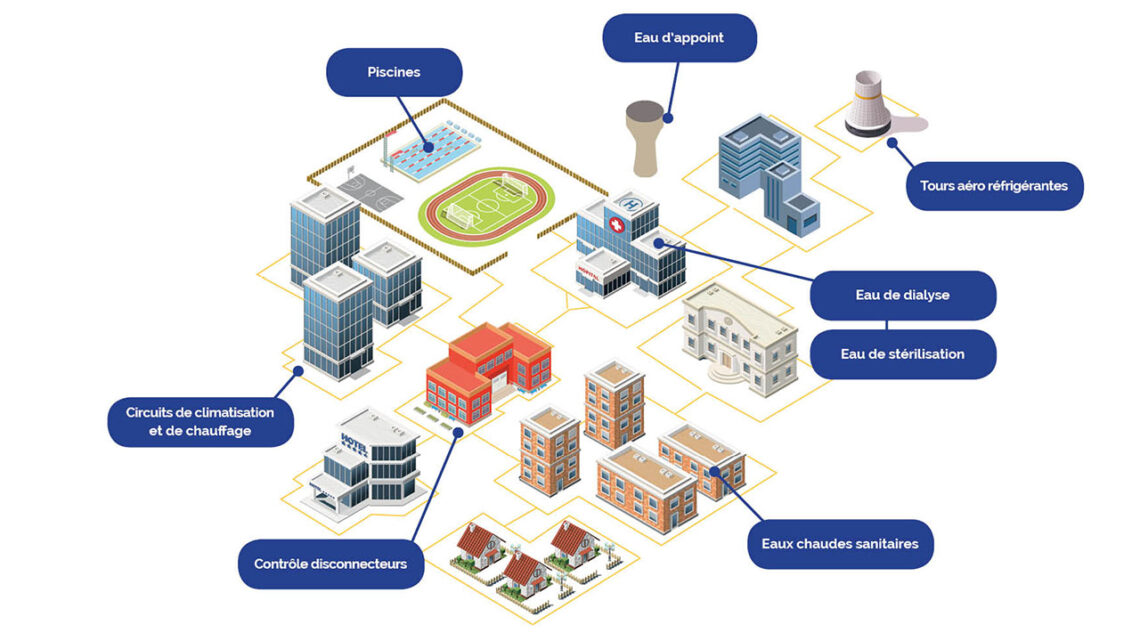
In a professional context, choosing a water softener cannot be approximate. Tertiary buildings, industries, healthcare facilities, municipalities, or complex technical installations: water treatment plays a key role in equipment reliability, cost control, and regulatory compliance.
Between chronometric and volumetric water softeners, the differences are not merely technical: they have a direct impact on performance, resource consumption, and treatment stability over time.
This article provides clear and professional analysis to help operators, installers, and designers choose a solution adapted to field requirements.
The Strategic Role of Water Softening in Professional Settings
In a professional environment, water softening aims primarily to:
protect installations (boilers, heat exchangers, networks, cooling towers),
ensure optimal energy efficiency,
reduce costs related to maintenance, descaling, and breakdowns,
ensure stable operation of processes using water.
Limescale is one of the main factors causing equipment deterioration. An improperly sized or controlled water softener can quickly generate significant additional costs and performance loss.
Common Principle: Ion Exchange Resins
Both chronometric and volumetric water softeners are based on the same principle:
ion exchange resins capture the calcium and magnesium responsible for water hardness and replace them with sodium ions.
The major difference lies in managing resin regeneration, that is, when and how often the water softener cleans itself to recover its exchange capacity.
Chronometric Water Softener: Regeneration Based on Time
Operation in Professional Environment
A water softener with chronometric control triggers regeneration on a fixed time cycle (for example every 48 or 72 hours), regardless of the actual volume of water treated.
This operation may suit certain simple installations, but quickly shows its limits when usage varies.
Advantages in Professional Settings
proven simple technology,
rapid implementation,
lower initial investment,
acceptable for installations with constant flow and very regular usage.
Operational Limitations
unnecessary regenerations during low consumption,
overconsumption of water and salt,
difficulty maintaining stable residual hardness,
lack of flexibility if activity varies.
In professional settings, chronometric water softeners are often considered a basic solution, suitable for very specific but non-evolving contexts.
Volumetric Water Softener: Regeneration Controlled by Actual Consumption
Operation and Precision
The volumetric water softener integrates a volumetric meter that precisely measures the volume of water treated. Regeneration is triggered only when resin capacity is actually reached.
This operating mode allows automatic adaptation to flow variations and consumption changes, which are frequent in professional environments.
Key Advantages for Professionals
regeneration only when necessary,
optimization of water and salt consumption,
stability of residual hardness,
better protection of downstream equipment,
extended lifespan of resins.
In an industrial or tertiary setting, this precision allows better control of operating costs and improved service continuity.
Technical Points to Integrate from the Design Stage
precise analysis of hardness and peak flow,
rigorous sizing of resin capacity,
settings adapted to the process and operating constraints.
The volumetric water softener is now the reference for demanding professional installations.
Synthetic Comparison for Professional Applications
| Criteria | Chronometric | Volumetric |
|---|---|---|
| Regeneration Control | Fixed Time | Actual Volume |
| Adaptation to Variations | Poor | Excellent |
| Treatment Stability | Variable | Very High |
| Water/Salt Consumption | Higher | Optimized |
| Operating Cost | Higher | Controlled |
| Professional Relevance | Limited | Recommended |
What Type of Water Softener Depending on Your Application?
Simple and Constant Applications
small technical buildings,
process with fixed flow,
strict budget constraints.
Chronometric may be considered, under strict conditions.
Variable or Critical Applications
collective heating systems,
industry,
hospitals, hotels, municipalities,
processes sensitive to limescale.
Volumetric strongly recommended, or essential.
The Importance of Sizing and Control
In professional settings, technology choice alone is insufficient. A water softener must be:
correctly sized according to maximum flow,
set based on inlet hardness and desired residual hardness,
integrated into an overall water treatment strategy.
Poor sizing can eliminate the benefits of the best technology.
Water Treatment Expertise: A Key Performance Factor
The choice between chronometric and volumetric water softeners should be part of a comprehensive water treatment approach. Audit, water analysis, usage study, and ongoing monitoring are essential to guarantee installation performance.
Conclusion: A Strategic Choice for Long-Term Performance
In a professional environment, the difference between chronometric and volumetric water softeners is primarily a matter of control, reliability, and operating costs.
While chronometric can meet simple requirements, volumetric emerges as the most efficient and safest solution for the majority of professional applications.
Have a Question About This Product?
Our technical team is at your service to advise you and offer the solution adapted to your B2B project.
Request a Quote View Our Catalogues